


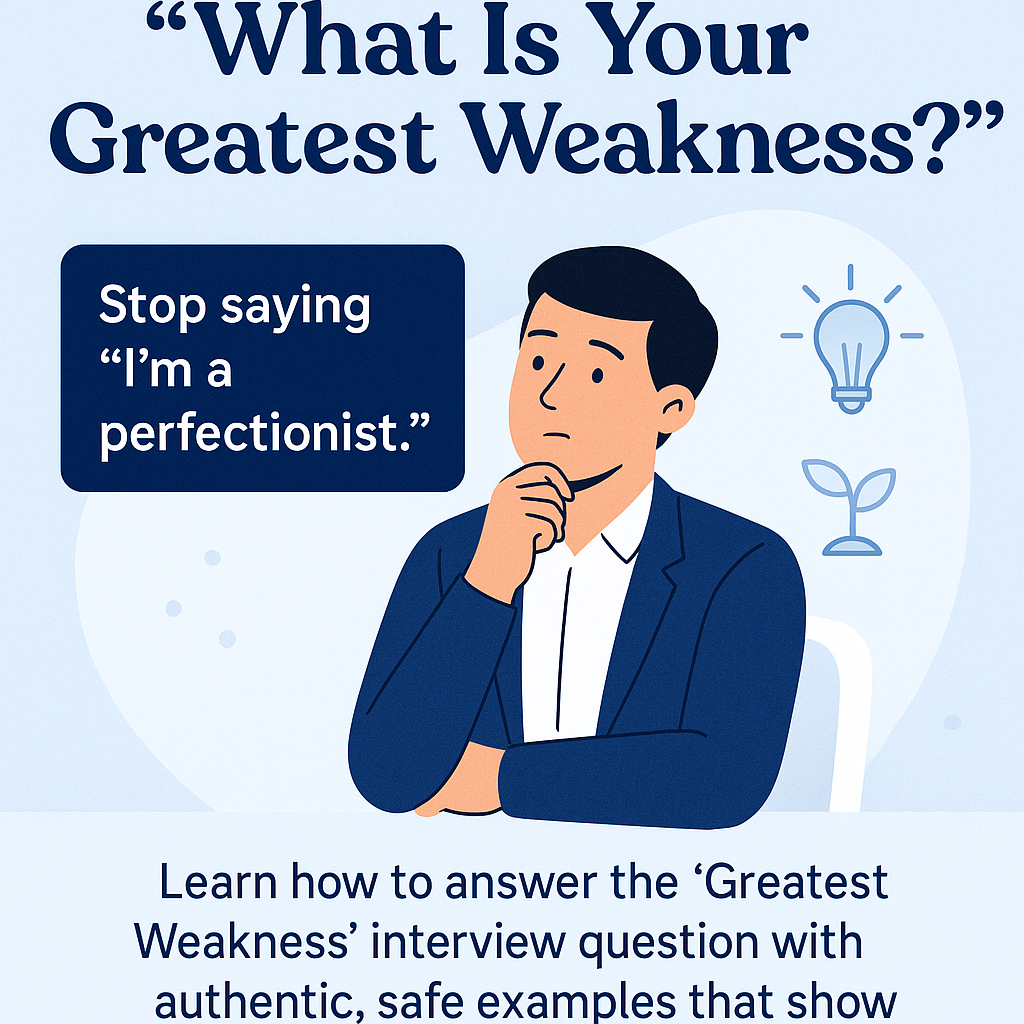
Best Answer to "What Is Your Greatest Weakness?"
It is the question everyone hates.
"What is your greatest weakness?"
It feels like a trap. * If you are too honest ("I’m lazy and I hate mornings"), you don't get the job. * If you are fake ("I work too hard" or "I am a perfectionist"), the recruiter rolls their eyes. They have heard "perfectionism" 500 times this week. It signals a lack of self-awareness.
So, how do you answer?
Recruiters ask this to test three things: 1. Honesty: Can you admit when you are wrong? 2. Self-Awareness: Do you know your own blind spots? 3. Growth: Do you have a plan to fix them?
The secret is to choose a Real Weakness that is Fixable and Not Fatal to the job.
Here is the formula to craft the perfect answer, plus 3 safe examples you can steal.
The Strategy: The "Weakness + Work in Progress" Formula
Never just state the weakness. Always pair it immediately with the solution.
The Formula: 1. State the Weakness: Be specific and brief. 2. The Context: When does it happen? 3. The Fix: What specific steps are you taking right now to improve?
Example 1: Public Speaking (The "Introvert" Answer)
Safe for: Developers, Accountants, Writers, Analysts. Risky for: Sales, PR, Leadership.
The Script:
"I’ve historically struggled with public speaking. I tend to get nervous when presenting to large groups, which sometimes means my ideas don't come across as confidently as I'd like.
However, I know this is a critical skill for senior roles. To fix this, I recently joined a local Toastmasters club/took an online workshop to practice. I’ve also started volunteering to lead our weekly team stand-ups to get more comfortable speaking in front of smaller groups."
Why it works: It is a very common fear. It shows you are actively pushing your comfort zone.
Example 2: Delegating Tasks (The "Control Freak" Answer)
Safe for: Junior to Mid-level employees. Risky for: Senior Directors/VPs (who must delegate).
The Script:
"I sometimes struggle with letting go of tasks. I take a lot of pride in my work, so I have a tendency to want to double-check everything myself rather than delegating it to others.
I realized this was becoming a bottleneck for my team. Lately, I’ve been using project management tools like Asana to assign tasks and trust the process. I’m learning that trusting my team actually produces better results than trying to do it all myself."
Why it works: It frames your weakness as "caring too much about quality," but acknowledges it needs to change for scale.
Example 3: Being Direct / Giving Feedback (The "Too Nice" Answer)
Safe for: Support roles, HR, Creative. Risky for: Management.
The Script:
"In the past, I’ve struggled with being too direct when giving constructive feedback. I naturally want to avoid conflict, so I used to sugarcoat things, which wasn't helpful for my colleagues' growth.
I’ve been working on the concept of 'Radical Candor'—being kind but clear. Now, before I give feedback, I write down exactly what I want to say to ensure it is objective and helpful, rather than just 'nice'."
Why it works: It shows high emotional intelligence (EQ).
The "Fatal" Weaknesses (Do NOT Say These)
A "Fatal" weakness is one that prevents you from doing the core function of the job.
- If you are an Accountant: Don't say, "I am bad at details."
- If you are in Sales: Don't say, "I have trouble talking to strangers."
- If you are a Manager: Don't say, "I hate confrontation."
Also, avoid "Personality Flaws" that can't be fixed: * "I have a short temper." (Red flag). * "I get bored easily." (Red flag). * "I don't like authority." (Huge Red flag).
Conclusion: Be Human
The interviewer doesn't want a superhero. They want a human being who is constantly upgrading their operating system.
When you share a real weakness and your plan to fix it, you stop looking like a candidate trying to "win" the interview and start looking like a professional who is focused on growth.
To practice delivering this answer without sounding rehearsed, use the JobPe Mock Interview Tool.
For more difficult interview questions deconstructed, https://jobpe.com.

Creative Content Writer
More from Debojyoti Roy
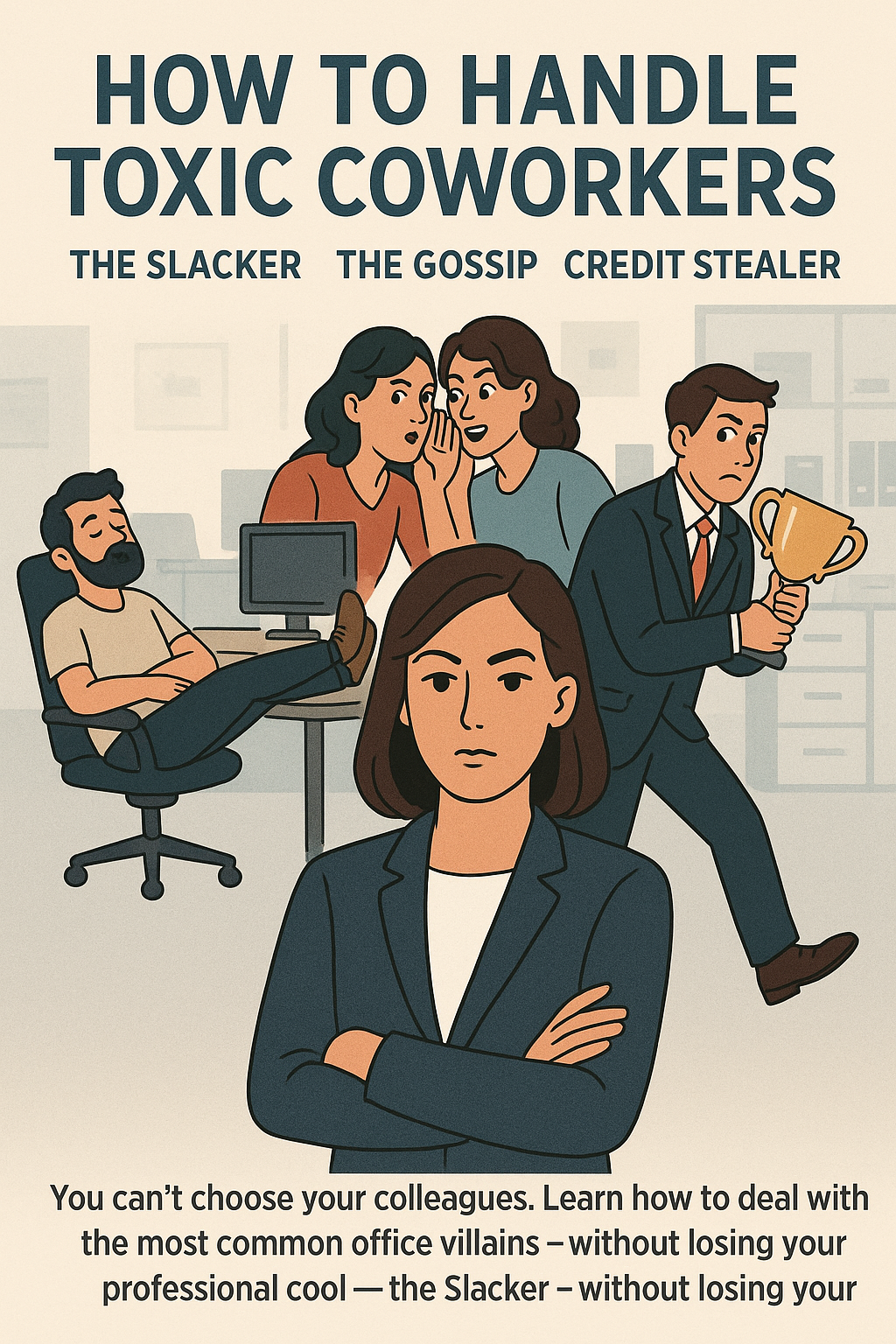
How to Handle Toxic Coworkers: The Slacker, The Gossip, and The Credit Stealer
You can't choose your colleagues. Learn how to deal with the most common office villains—the Credit Stealer, the Chronic Complainer, and the Slacker—without losing your professional cool.
2026-01-20
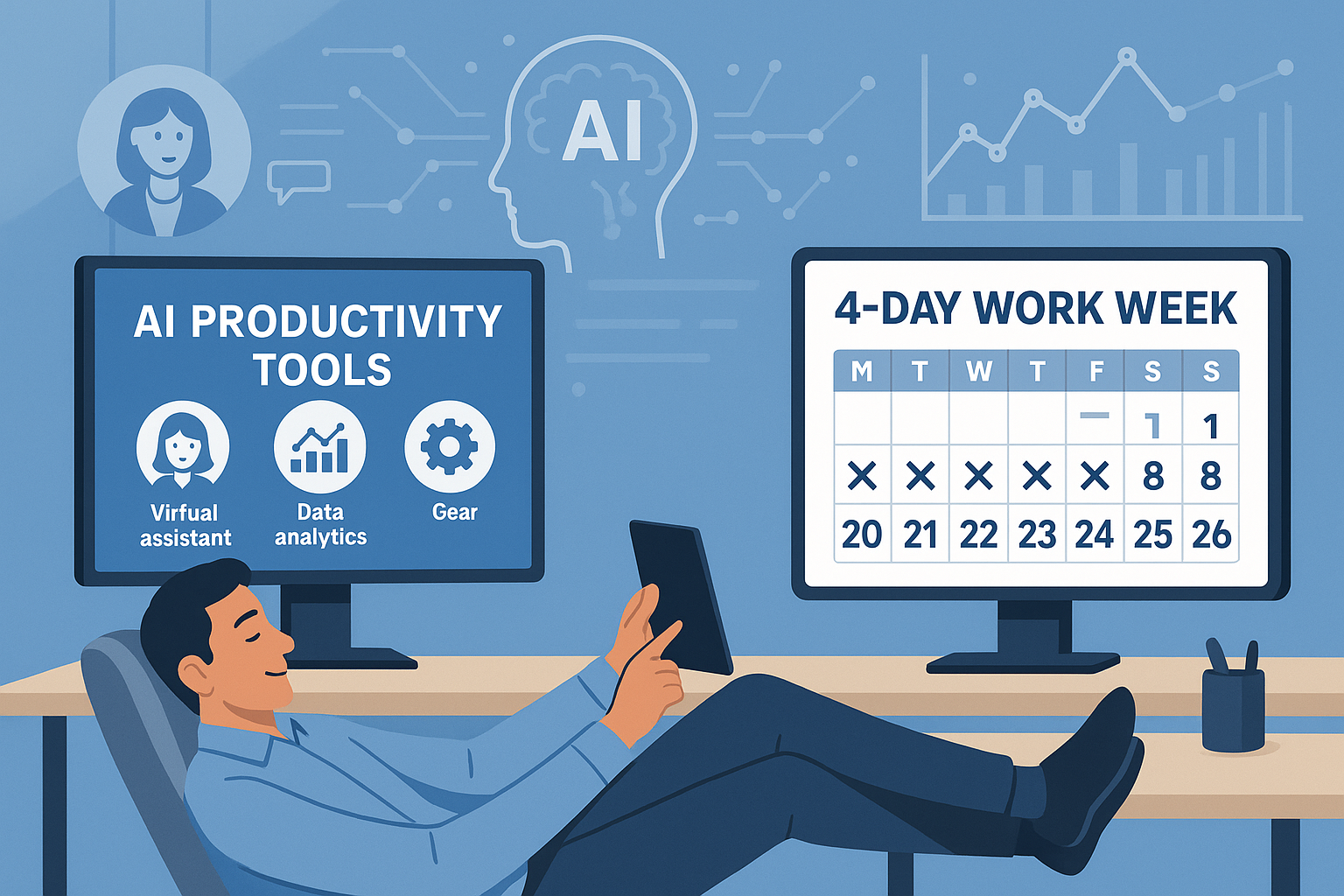
The 4-Day Work Week: Will AI Finally Make It a Reality?
Can Artificial Intelligence unlock the 4-day work week? We analyze how AI productivity tools could shorten the work week, the economic obstacles standing in the way, and how to position yourself for an output-based career.
2026-01-20
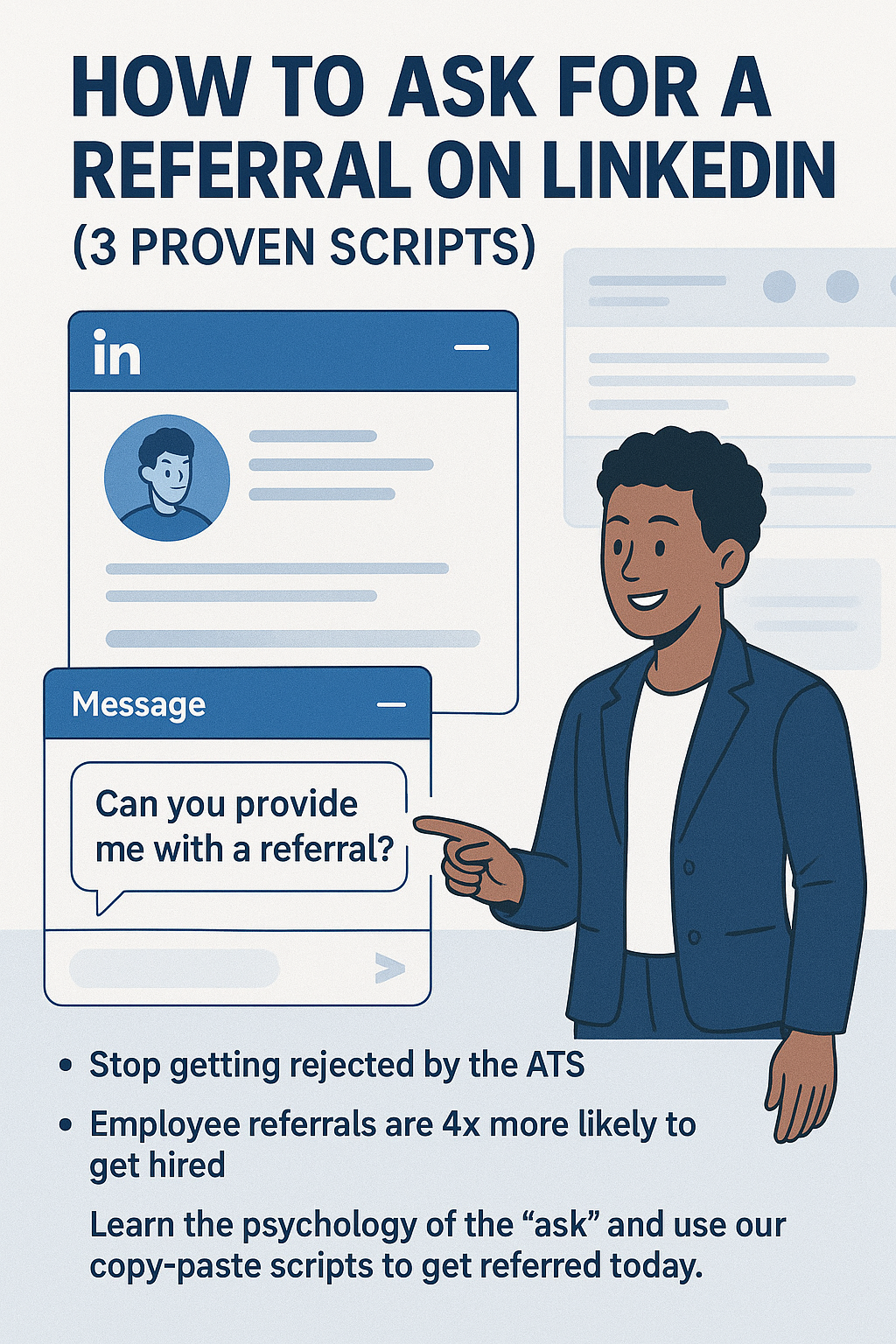
How to Ask for a Referral on LinkedIn (3 Proven Scripts)
Stop getting rejected by the ATS. Employee referrals are 4x more likely to get hired. Learn the psychology of the "ask" and use our copy-paste scripts to get referred today.
2026-01-08
Video Interview Tips: How to Ace Your Zoom & Teams Interview |
Nervous about your virtual interview? From lighting hacks to eye contact secrets, master these 7 video interview tips to look professional on Zoom, Google Meet, or Teams.
2026-01-08
Best Answer: "Why Did You Leave Your Last Job?"
"Why did you leave your last job?" is a trap. If you complain, you lose. Learn the safe, professional scripts to explain layoffs, toxic bosses, or seeking better opportunities.
2026-01-07