


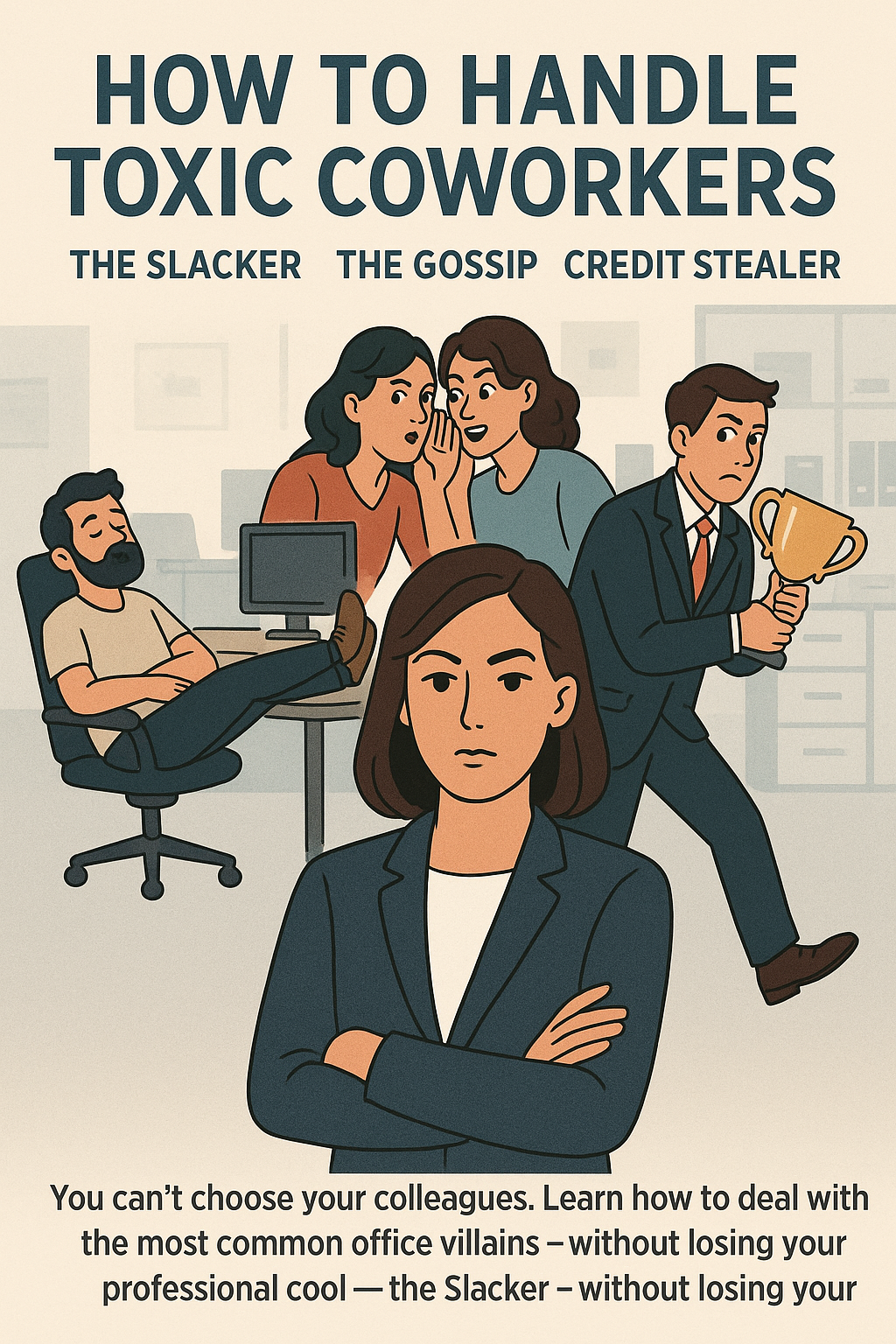
How to Handle Toxic Coworkers: The Slacker, The Gossip, and The Credit Stealer
You love the job. You like the salary. You respect the company.
But there is that one person.
Maybe they talk too loud. Maybe they never do their part of the group project. Maybe they smile to your face and steal your ideas in the meeting.
Dealing with difficult personalities is not just an annoyance; it is a career skill. A toxic coworker can drain your energy, ruin your reputation, and make you dread Monday mornings.
You cannot change them. But you can change how you react to them.
This guide profiles the 3 most common "Office Villains" and gives you the exact tactical playbook to neutralize them without getting dragged into the mud.
Villain 1: The Credit Stealer
The Move: You brainstorm an idea over coffee. Two days later, they present it in a meeting as their own. The Reaction: You feel betrayed and want to scream, "That was mine!"
How to Handle Them: Do not confront them angrily in private (they will deny it). Instead, use "Public Correction through Confirmation."
- The Tactic: "Paper Trail & Pivot."
- The Script (In the Meeting): "Thanks for bringing that up, Mark. I’m glad you liked the concept I shared with you on Tuesday. As I mentioned then, the key to making it work is [Add a specific detail they missed]."
- Why it works: You aren't accusing them of stealing (which looks petty); you are thanking them for "sharing your idea." You reclaim ownership instantly while looking gracious.
Villain 2: The Slacker (Weaponized Incompetence)
The Move: They "forget" how to use Excel. They miss deadlines. They ask you to "just quickly help" them, and you end up doing their whole job. The Reaction: You do it yourself because it's faster than arguing.
How to Handle Them: Stop enabling them. Every time you save them, you teach them that laziness works.
- The Tactic: "The Return to Sender."
- The Script: "I can't take this on right now as I have my own deadlines. I’ve sent you the link to the training video that explains how to do it. Let me know if you’re stuck after you’ve watched it."
- The Documentation: If their laziness impacts your project, document it. Send an email: "Hi [Name], just a reminder that I need your part by Tuesday to finish the report." When they fail, you have proof it wasn't your fault.
Villain 3: The Chronic Complainer (The Energy Vampire)
The Move: They hate the boss. They hate the coffee. They hate the weather. They come to your desk to vent for 30 minutes every day. The Reaction: You listen politely because you don't want to be rude, but you leave feeling exhausted.
How to Handle Them: Complainers want validation. If you give them sympathy, they will never leave.
- The Tactic: "The Solution Pivot."
- The Script:
- Colleague: "I can't believe they changed the policy again. It's so stupid."
- You: "Yeah, it’s a big change. So, what are you going to do about it?"
- Why it works: This question forces them to switch from "Victim Mode" to "Action Mode." Usually, they don't want to do anything, so they will realize you aren't a fun audience and wander away.
The Ultimate Defense: The "Grey Rock" Method
For the truly toxic coworker (the narcissist or the drama magnet), the best strategy is psychology.
Become a Grey Rock. * Be Boring: Give short, neutral answers. ("Okay." "I see." "Thanks.") * Be Unemotional: Do not get angry, sad, or excited. * Be Invisible: Do not share personal details about your weekend or family.
If you offer no "drama fuel," they will get bored and move on to a softer target.
Conclusion: Protect Your Peace
You are paid to do a job, not to fix broken personalities.
Set your boundaries early. Document your work. And remember: The best revenge is not a petty email war; it is getting promoted while they are still complaining at the water cooler.
For more advice on navigating office dynamics, https://jobpe.com.

Creative Content Writer
More from Debojyoti Roy

The 4-Day Work Week: Will AI Finally Make It a Reality?
Can Artificial Intelligence unlock the 4-day work week? We analyze how AI productivity tools could shorten the work week, the economic obstacles standing in the way, and how to position yourself for an output-based career.
2026-01-20

Best Answer to "What Is Your Greatest Weakness?"
Stop saying "I'm a perfectionist." Learn how to answer the "Greatest Weakness" interview question with authentic, safe examples that show growth and self-awareness.
2026-01-19
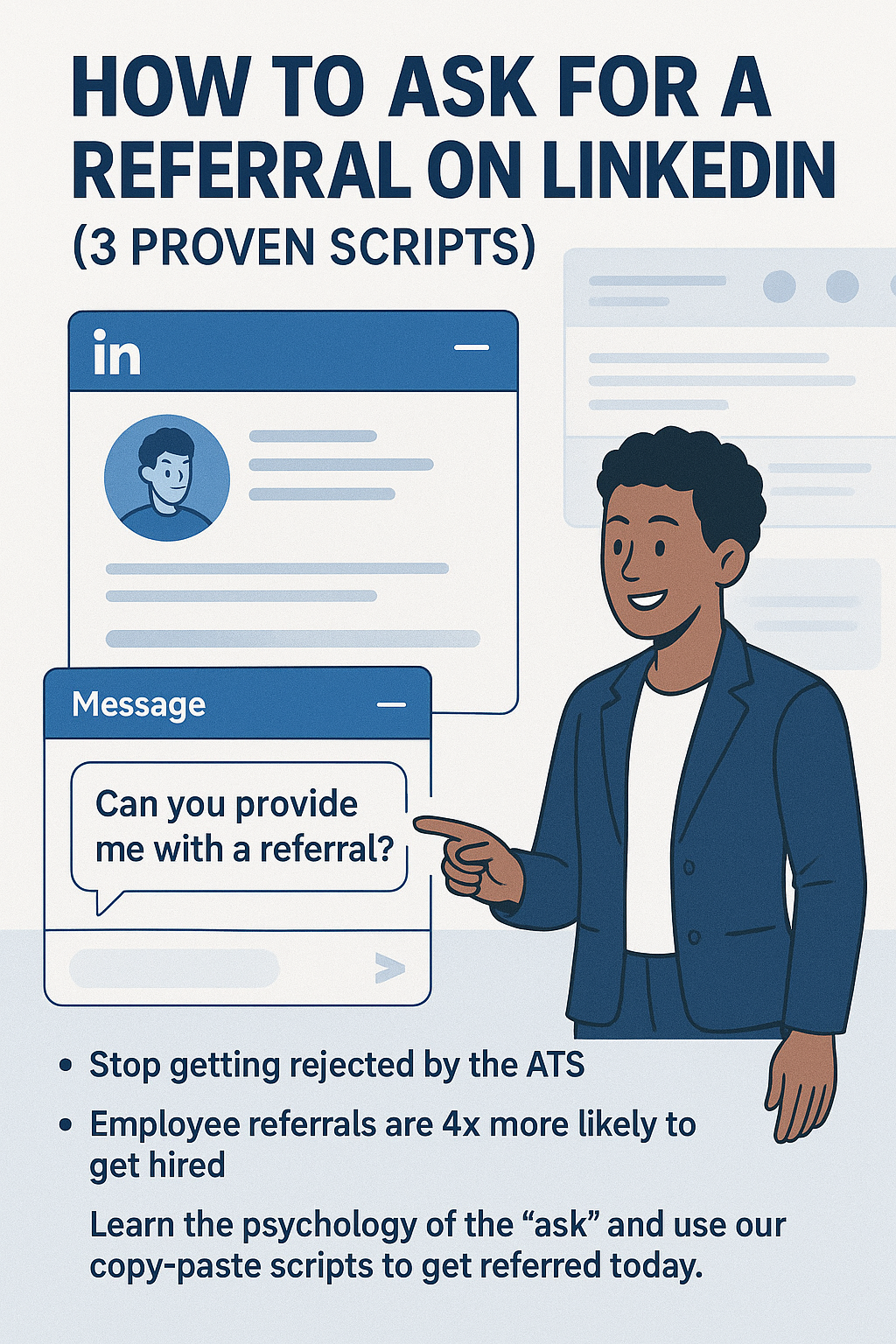
How to Ask for a Referral on LinkedIn (3 Proven Scripts)
Stop getting rejected by the ATS. Employee referrals are 4x more likely to get hired. Learn the psychology of the "ask" and use our copy-paste scripts to get referred today.
2026-01-08

Video Interview Tips: How to Ace Your Zoom & Teams Interview |
Nervous about your virtual interview? From lighting hacks to eye contact secrets, master these 7 video interview tips to look professional on Zoom, Google Meet, or Teams.
2026-01-08
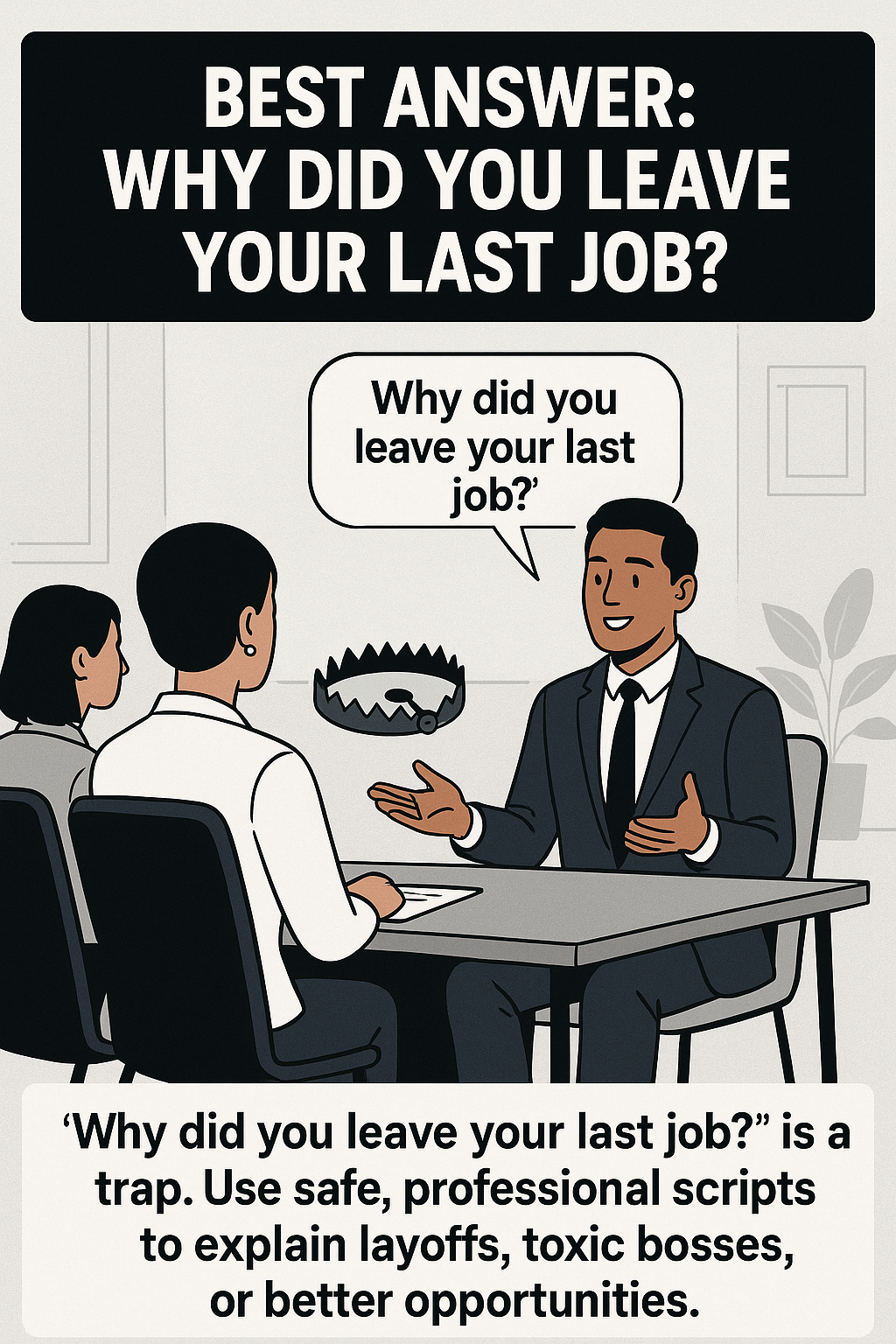
Best Answer: "Why Did You Leave Your Last Job?"
"Why did you leave your last job?" is a trap. If you complain, you lose. Learn the safe, professional scripts to explain layoffs, toxic bosses, or seeking better opportunities.
2026-01-07