


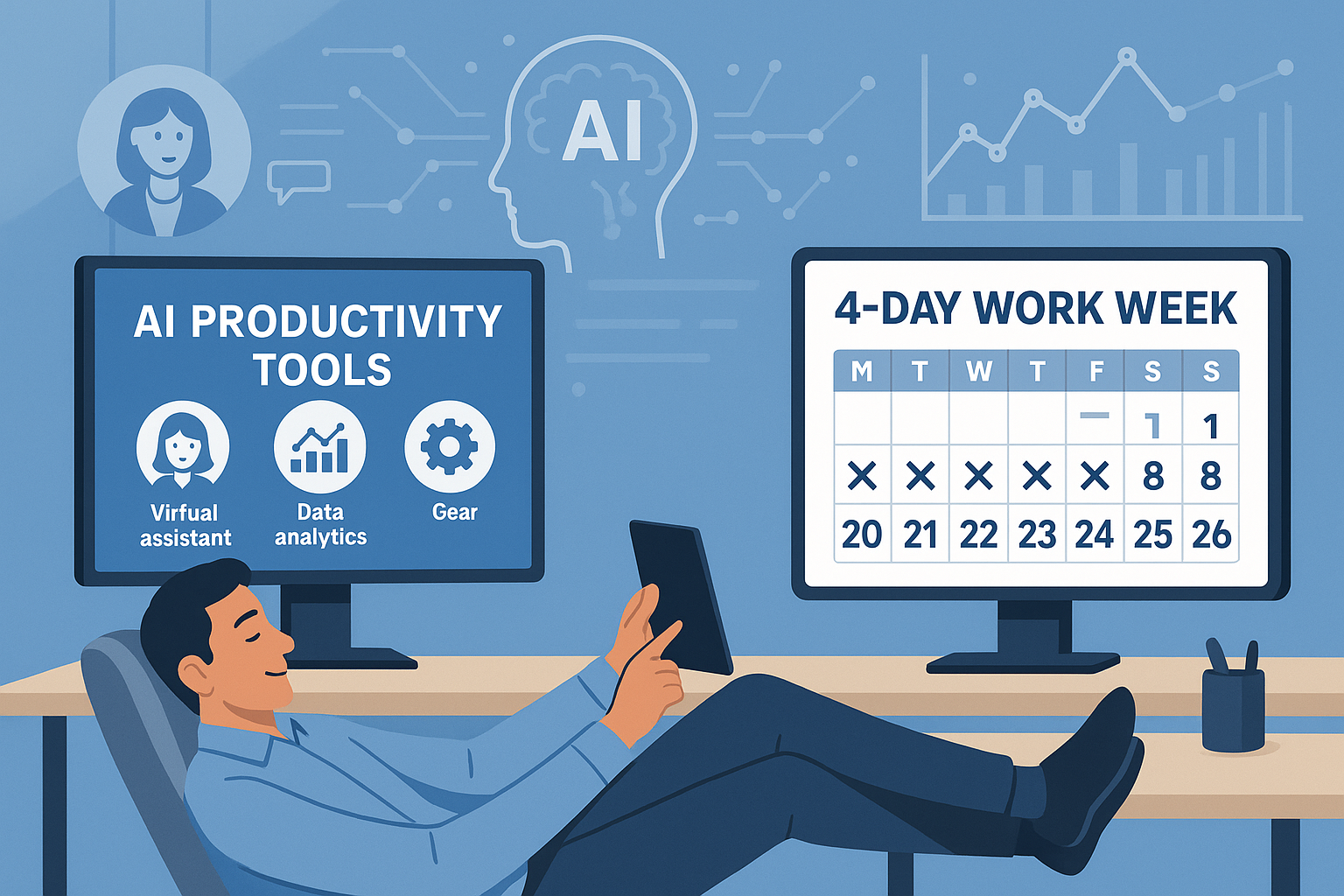
The 4-Day Work Week: Will AI Finally Make It a Reality?
In 1926, Henry Ford popularized the 5-day, 40-hour work week. Before that, 6 days was the norm. Ford’s logic was simple: leisure time creates consumers. If people have time off, they buy cars to drive on weekends.
For 100 years, we have stuck to this schedule, even as technology exploded. Emails, laptops, and smartphones made us faster, yet we still sat in chairs for 40 (or often 50) hours a week.
Now, we are facing the biggest disruptor since the assembly line: Artificial Intelligence.
With tools like ChatGPT, Claude, and Copilot automating coding, writing, and data analysis, productivity is skyrocketing. The question on everyone’s mind is: If AI can do 20% of my job, can I take Fridays off?
The answer is yes—but only if we change how we measure "work."
The Math: Doing More in Less Time
The argument for the 4-day work week is mathematically sound.
A 2023 study by the Autonomy think tank found that AI adoption could reduce the work week to 32 hours for 28% of the workforce without a loss in output.
Consider the "drudgery" of the modern office: * Meetings: AI notetakers (like Otter.ai) summarize hour-long calls in 2 minutes. * Emails: AI drafts responses, cutting inbox time by half. * Creation: Designers use Midjourney to prototype concepts in seconds rather than days.
If these tools save the average employee 8-10 hours a week, the 5th day becomes redundant. We are technically "working" the same amount of output, just in fewer hours.
The Obstacle: The "Jevons Paradox"
If the math works, why aren't we all at the beach on Fridays?
Economists point to the Jevons Paradox. In the 19th century, William Jevons noticed that as steam engines became more efficient with coal, coal consumption didn't drop—it increased. Because energy was cheaper, people found new ways to use it.
The same applies to work. * The Trap: If AI helps you write a report in 1 hour instead of 4, your boss might not say, "Take the rest of the day off." They might say, "Great, now write 3 more reports."
Historically, efficiency gains have led to higher expectations, not shorter hours. For the 4-day week to happen, companies must consciously choose Work-Life Balance over Infinite Growth.
The Shift: "Time-Based" vs. "Output-Based" Work
The 4-day work week will not be handed to us; it will be adopted by companies that measure Output, not Time.
- The Old Model (Input-Based): "You sat at your desk from 9 to 5. Good job."
- The New Model (Output-Based): "You delivered the project. We don't care if it took you 32 hours or 40 hours."
AI is forcing this transition. If a junior employee using AI can outperform a senior employee who refuses to use it, "years of experience" and "hours logged" become irrelevant metrics. The only thing that matters is the result.
Case Studies: It Is Already Happening
Several forward-thinking companies are already testing this model, often fueled by tech efficiency:
- Microsoft Japan: Tested a 4-day week and saw a 40% boost in productivity.
- Kickstarter & Bolt: Have permanently shifted to 4-day weeks to prevent burnout and retain talent.
- The UK Pilot Program: 61 companies trialed a 4-day week. 92% decided to keep it, citing happier employees and maintained revenue.
How to Position Yourself for the 4-Day Future
You don't have to wait for a government mandate. You can build a "micro" 4-day week for yourself by becoming an AI-Augmented Professional.
- Automate the Boring Stuff: Use AI to clear your administrative backlog early in the week.
- Negotiate on Deliverables: When setting goals with your manager, focus on what needs to be done, not when. "If I finish the Q1 report by Thursday, can I use Friday for deep learning/light work?"
- Target "Results-Only" Companies: When job hunting, look for cultures that value "Asynchronous work" and "Autonomy." These are code words for "We don't watch the clock."
Conclusion: A Choice, Not a Guarantee
AI can unlock the 4-day work week. The technology is ready. The barrier is cultural.
The future of work isn't about working harder; it's about working smarter. If we can leverage AI to reclaim our time, the 5-day work week might soon look as outdated as the 6-day week does today.
To find companies that are already embracing flexible, future-forward work cultures, search specifically for "Remote" and "Flexible" roles on JobPe.
For more insights on the changing landscape of labor, https://jobpe.com.

Creative Content Writer
More from Debojyoti Roy
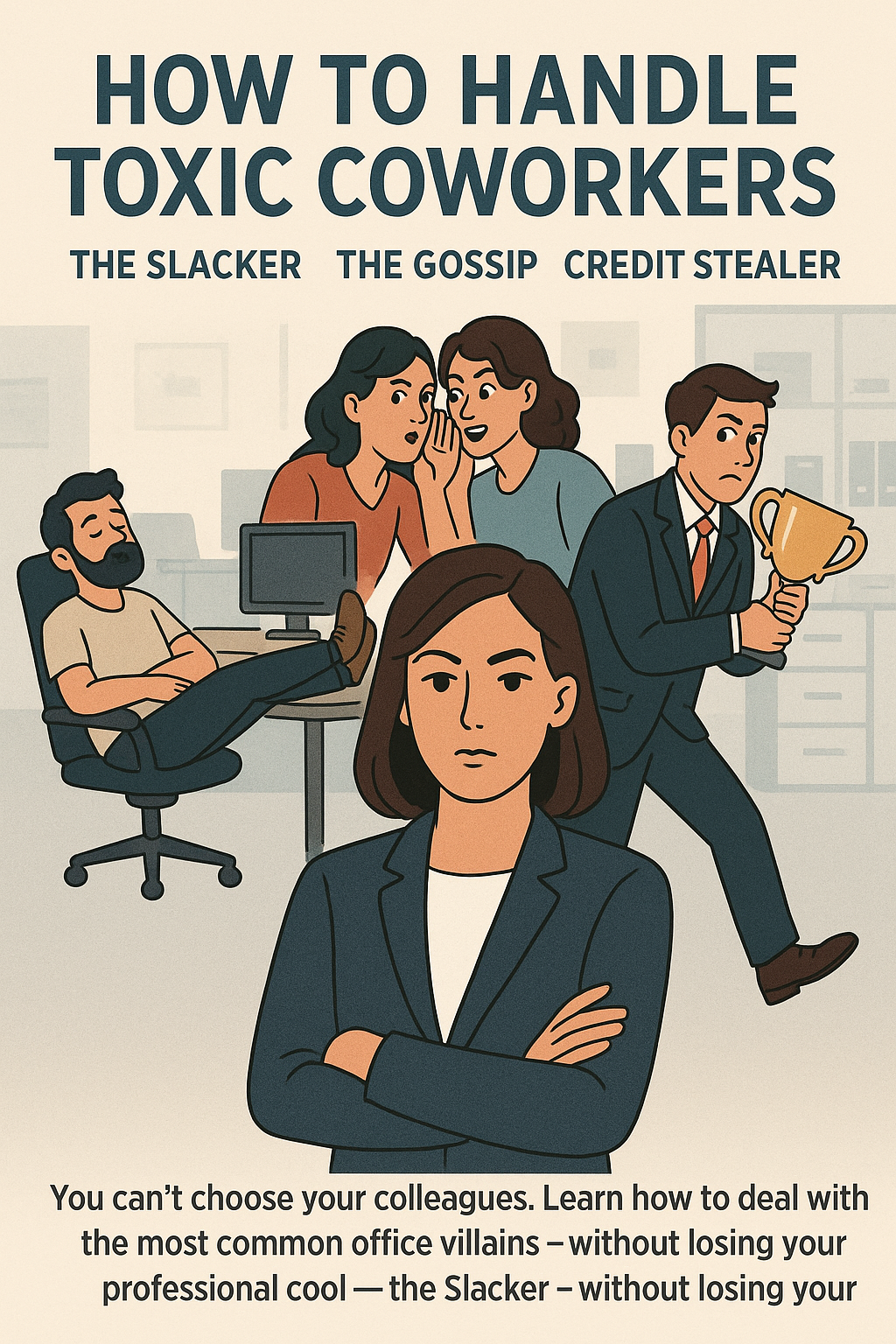
How to Handle Toxic Coworkers: The Slacker, The Gossip, and The Credit Stealer
You can't choose your colleagues. Learn how to deal with the most common office villains—the Credit Stealer, the Chronic Complainer, and the Slacker—without losing your professional cool.
2026-01-20

Best Answer to "What Is Your Greatest Weakness?"
Stop saying "I'm a perfectionist." Learn how to answer the "Greatest Weakness" interview question with authentic, safe examples that show growth and self-awareness.
2026-01-19
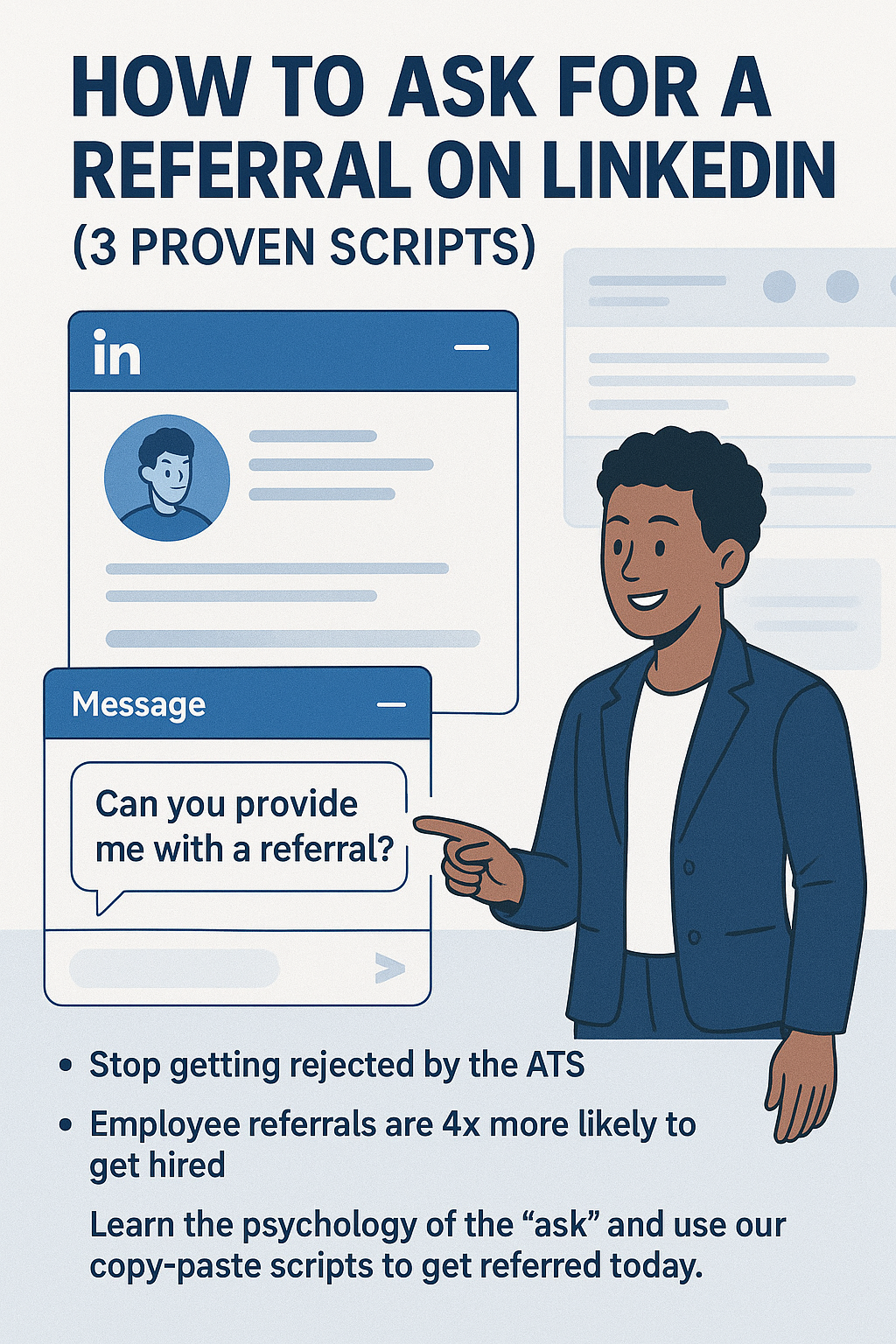
How to Ask for a Referral on LinkedIn (3 Proven Scripts)
Stop getting rejected by the ATS. Employee referrals are 4x more likely to get hired. Learn the psychology of the "ask" and use our copy-paste scripts to get referred today.
2026-01-08

Video Interview Tips: How to Ace Your Zoom & Teams Interview |
Nervous about your virtual interview? From lighting hacks to eye contact secrets, master these 7 video interview tips to look professional on Zoom, Google Meet, or Teams.
2026-01-08
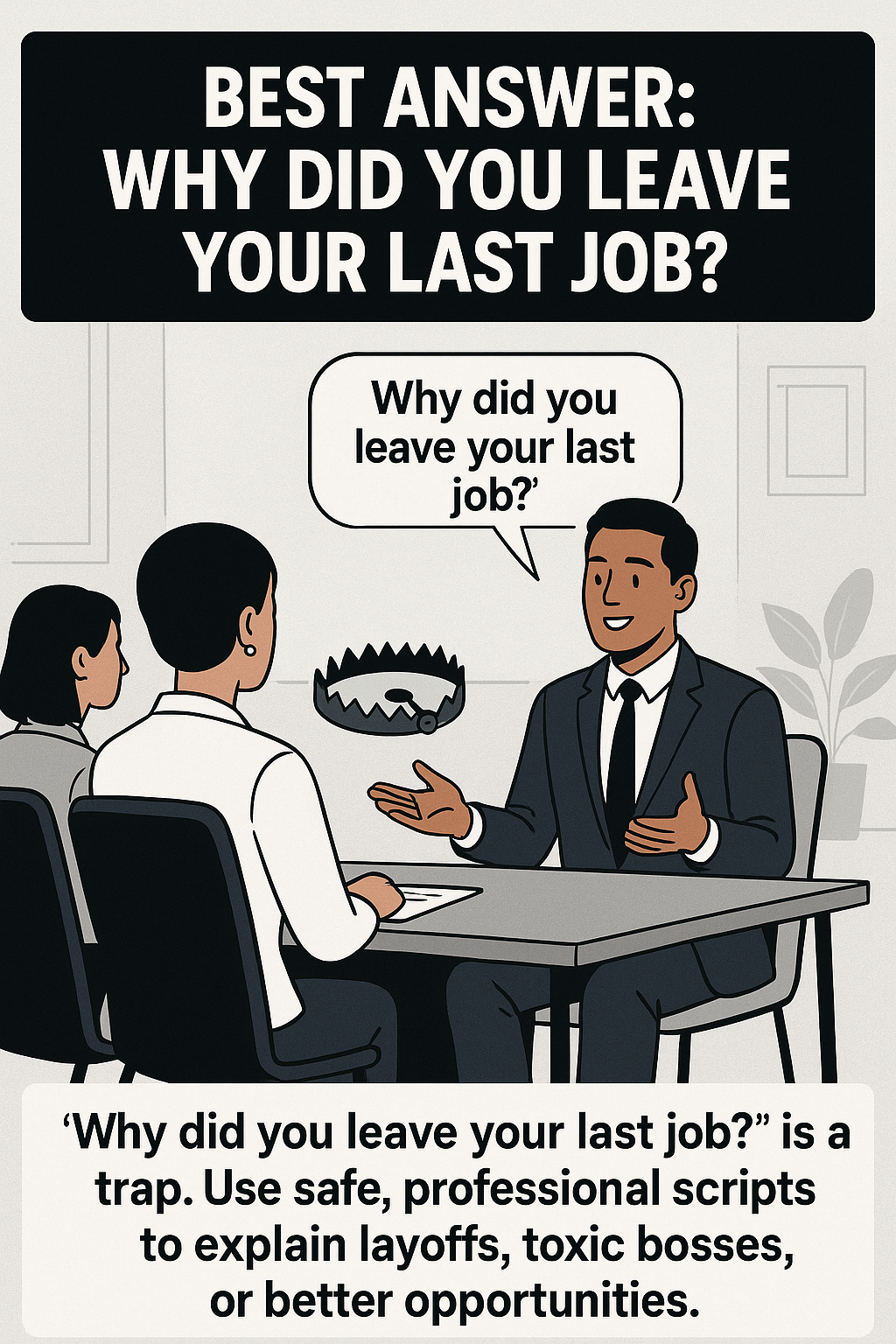
Best Answer: "Why Did You Leave Your Last Job?"
"Why did you leave your last job?" is a trap. If you complain, you lose. Learn the safe, professional scripts to explain layoffs, toxic bosses, or seeking better opportunities.
2026-01-07