


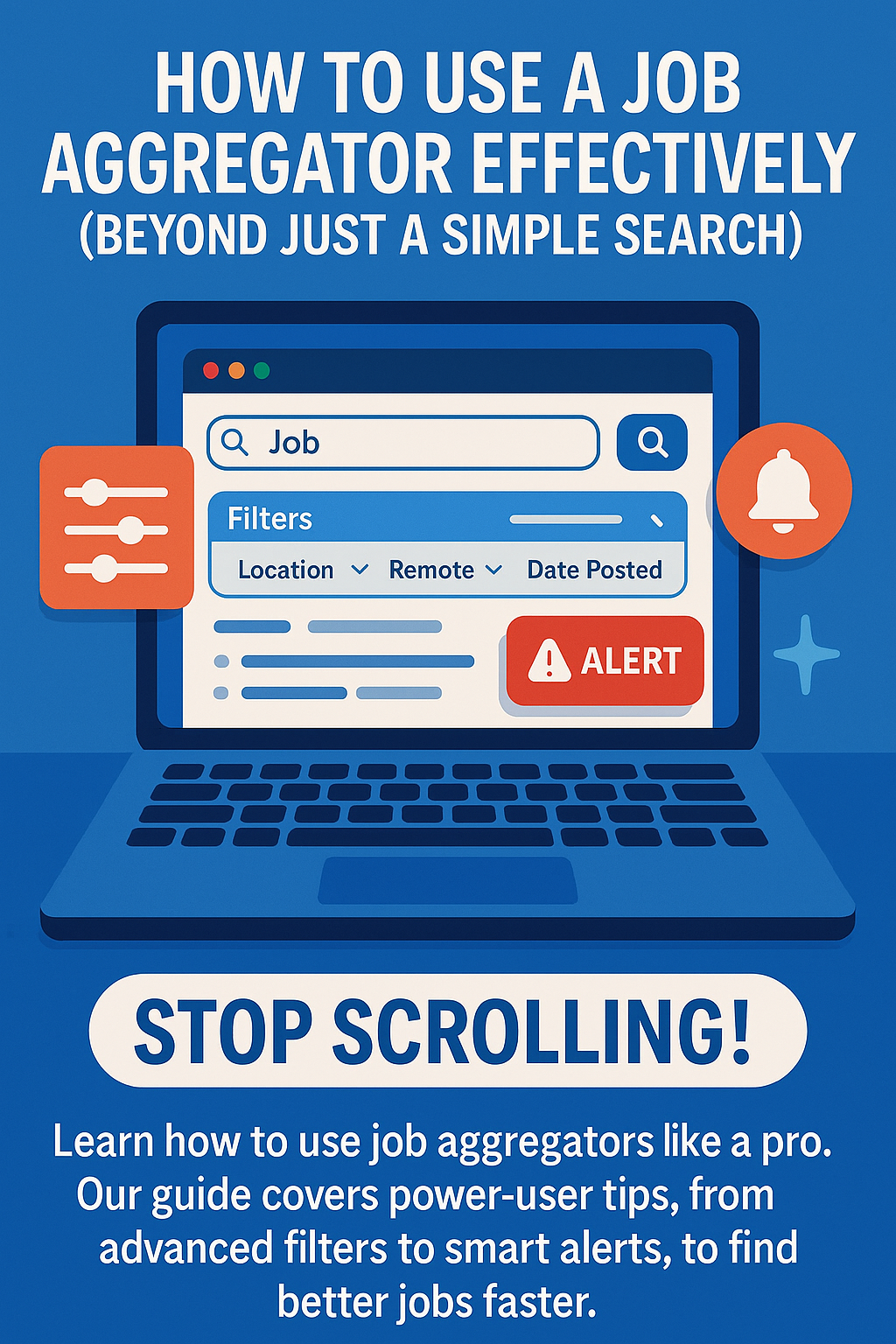
How to Use a Job Aggregator Effectively Beyond Just a Simple Search
In the modern job hunt, a powerful job aggregator or job board is your single most important tool. Platforms like JobPe have revolutionized the search process, consolidating millions of opportunities from thousands of company career pages, job boards, and listings into one single, searchable database. The convenience is undeniable. But for most job seekers, the way they use this powerful tool is incredibly inefficient.
The typical job search goes something like this: you go to the search bar, type in a generic job title like "Marketing Manager," and then spend the next two hours scrolling through hundreds, sometimes thousands, of irrelevant results. It’s a frustrating, time-consuming, and often demotivating experience. You're using a high-performance search engine like a blunt instrument, and it's burning you out.
If you're treating your job aggregator like a simple search engine, you're only using about 10% of its true power. These platforms are packed with sophisticated features designed to help you filter the noise, pinpoint the perfect opportunities, and even automate your search. Learning to use these tools like a "power user" can be the difference between a long, frustrating job hunt and a fast, strategic, and successful one.
This guide will take you beyond the simple search bar. We will uncover the advanced strategies and hidden features of modern job aggregators to help you stop scrolling and start applying to the jobs you actually want.
Strategy 1 Master the Advanced Search Filters
The simple search bar is your starting point, but the advanced filters are your navigation system. Never run a search without immediately applying filters to narrow the results.
- Go Beyond Just "Location": Don't just filter by your city. Use the "Salary Range" filter to immediately eliminate roles that don't meet your financial requirements. Use the "Experience Level" filter (e.g., "Fresher," "Entry-Level," "Senior Manager") to ensure you're only seeing jobs that match your qualifications.
- Filter by "Date Posted": This is one of the most underrated filters. By sorting your results by "Date Posted" and looking at jobs posted in the "Last 24 Hours" or "Last 3 Days," you can ensure you are one of the first candidates to apply. In a competitive market, speed is a huge advantage.
- Filter by Job Type: Be specific about the kind of employment you want. Use the filters to select "Full-Time," "Part-Time," "Contract," or "Internship." This is especially crucial for finding part-time jobs or contract-based "gig economy" roles.
Strategy 2 Think Like a Recruiter with Keyword Modifiers
The search bar is smarter than you think. You can use simple commands, often called Boolean operators, to get more precise results.
- Use Quotation Marks ("): If you search for
Marketing Manager, the platform might show you results for "Marketing" or "Manager." If you search for"Marketing Manager", it will only show you roles with that exact phrase. This is perfect for narrowing down your search. - Use "NOT" (or a minus sign -): Don't want to work in a specific industry? Try searching
"Software Developer" NOT "Recruitment". This will show you software developer roles while excluding any from recruiting or staffing agencies. - Use "OR": Looking for similar roles? Try searching
"Sales Executive" OR "Business Development". This tells the aggregator to show you listings that contain either one of those phrases, broadening your search in a very controlled way.
Strategy 3 Let the Jobs Come to You with Smart Job Alerts
This is the single most important strategy for an efficient job search. If you are manually searching for jobs every single day, you are wasting valuable time. Your goal is to automate this process.
Once you have created the "perfect" search using your advanced filters and keyword modifiers, you need to save that search as a job alert. A powerful platform like JobPe's Job Alerts will then act as your personal 24/7 scout. It will constantly scan new job postings, and the moment a new role is posted that matches your exact, specific criteria, it will send you an email notification.
This transforms your job search from a proactive, time-consuming "hunt" into a passive, efficient "wait." You can now dedicate your time to more valuable activities, like tailoring your resume and preparing for interviews, confident that you will never miss a new, relevant opportunity. You should set up multiple, highly specific alerts for each of your target roles and locations.
Strategy 4 Build a "Portfolio" of Tailored Resumes
Modern job platforms are not just search engines; they are application management systems. The best platforms, like JobPe, allow you to store multiple versions of your resume. This is a critical feature that you must use.
You should never use a single, generic resume for every application. As we've covered, a resume tailored to the job description is essential for getting past the Applicant Tracking System (ATS).
Use a tool like the JobPe Resume Builder to create several "master" versions of your resume, each one targeting a different type of role. For example:
* YourName_Resume_ProjectManager.pdf
* YourName_Resume_BusinessAnalyst.pdf
* YourName_Resume_Marketing.pdf
When you get a job alert for a new Business Analyst role, you can instantly apply with your pre-built, optimized resume, dramatically increasing your speed and efficiency without sacrificing quality.
Strategy 5 Look Beyond the Listings (Company Research)
The job aggregator is also your research tool. Don't just look at the job; look at the company that posted it. Reputable platforms will have dedicated company profile pages that can provide you with a wealth of information.
Before you apply, take two minutes to click on the company's profile. You can learn about their size, their industry, their company culture, and see all the other jobs they have open. This context is invaluable. It helps you tailor your cover letter ("I was excited to see you're expanding your data science team...") and shows the recruiter that you have done your homework.
Conclusion Stop Scrolling, Start Strategizing
A job aggregator is a powerful engine. It's time to stop treating it like a bicycle. By moving beyond the simple search bar and leveraging advanced filters, smart keywords, automated job alerts, and resume management features, you can take control of your job search.
This strategic approach will save you hours of wasted time, reduce your frustration, and, most importantly, ensure that the opportunities you see are the ones that are truly right for you. Your job search is a project—manage it with the right tools and the right strategy. Once this strategy starts landing you interviews, make sure you're ready to ace them by preparing with a comprehensive list of interview questions.
For more tools and resources to help you conduct a smarter, faster, and more effective job search, https://jobpe.com.

Creative Content Writer
More from Debojyoti Roy
Beating the Applicant Tracking System (ATS): The Ultimate Guide to Getting Past the Bot
Is your resume getting rejected instantly? It might be the ATS. Learn how Applicant Tracking Systems work, how to format your resume to beat the bot, and the keyword strategies that get you noticed.
2025-12-10
Mastering the Cold Email: How to Land a Job Without Applying Online
Tired of the "black hole" of online applications? Learn the art of the cold email. We provide strategies, subject lines, and templates to reach hiring managers directly.
2025-12-10
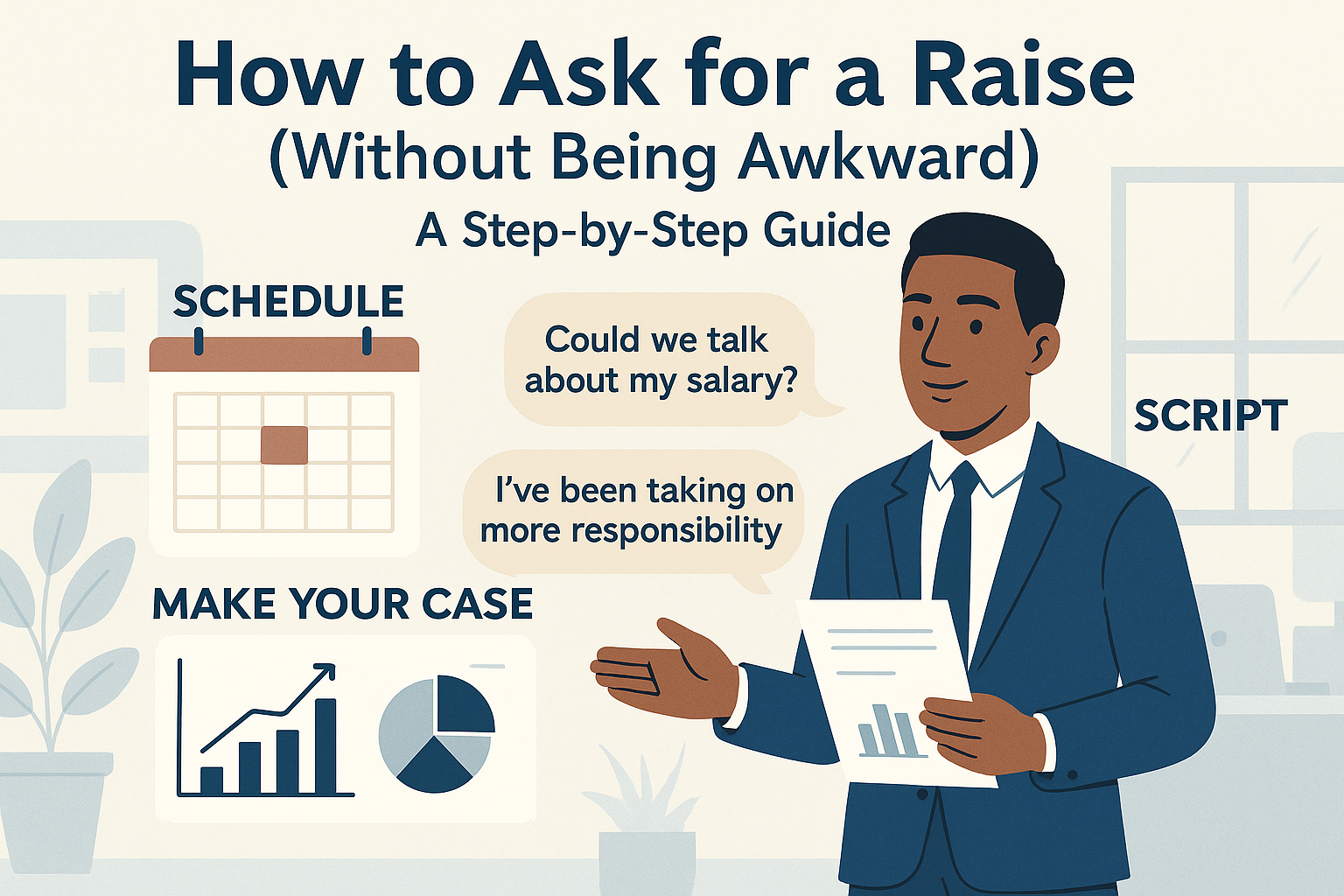
How to Ask for a Raise (Without Being Awkward): A Step-by-Step Guide
Don't wait for your annual appraisal. Learn the strategic way to ask for a raise, build your business case, and use our scripts to get the salary hike you deserve.
2025-12-10

The First 90 Days: A Strategic Plan to Impress Your New Boss
Your first 3 months in a new job determine your reputation. Use our 30-60-90 day plan to secure early wins, build relationships, and pass probation with flying colors.
2025-12-09
Background Verification (BGV) Explained: What Employers Actually Check (And What Gets You Rejected)
Worried about the background check? We decode the Background Verification (BGV) process in India, covering employment history, education checks, and how to handle discrepancies.
2025-12-09