


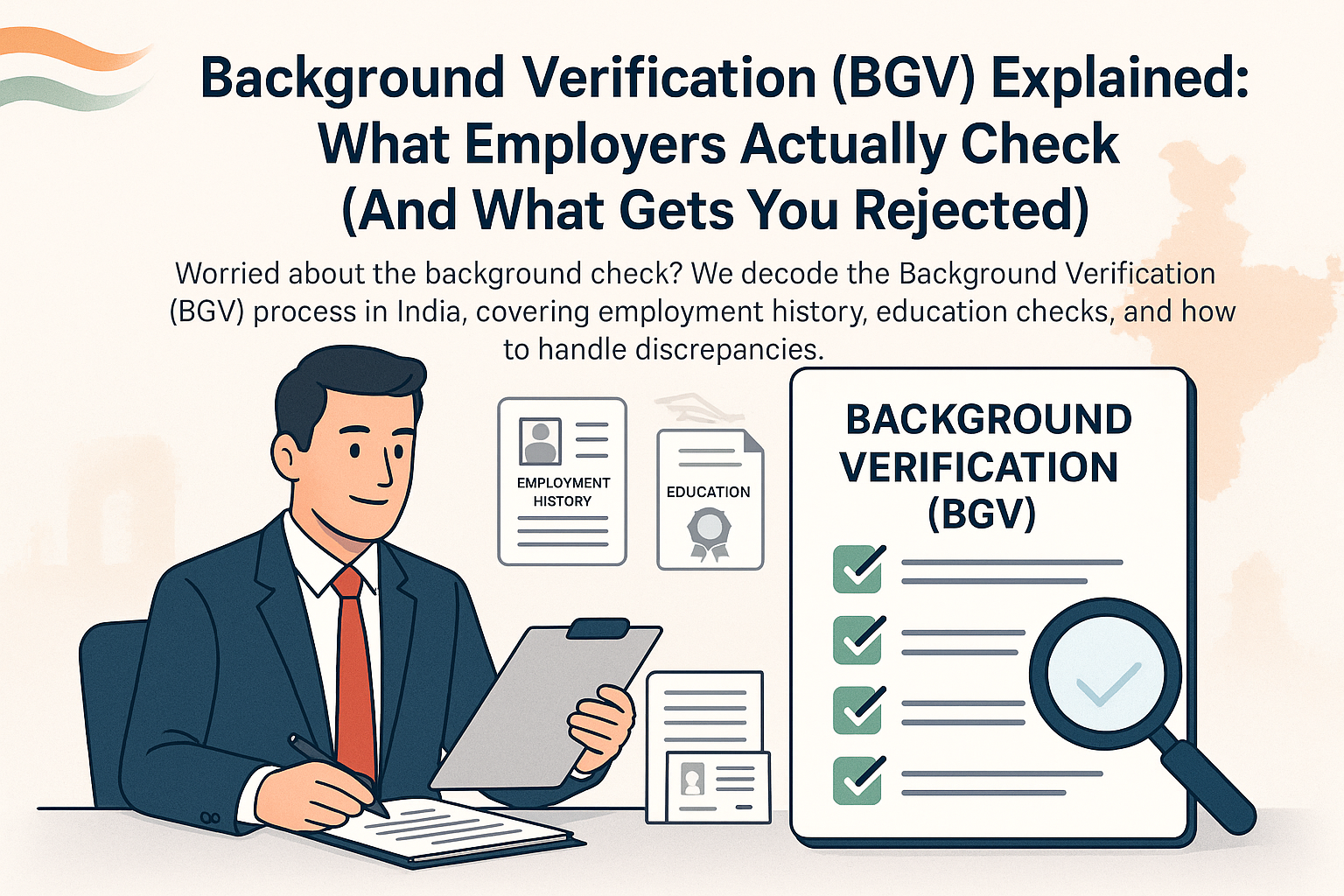
Background Verification (BGV) Explained: What Employers Actually Check (And What Gets You Rejected)
You’ve aced the interview. You’ve negotiated the salary. You’ve received the offer letter and resigned from your current job. You think you’ve crossed the finish line. But in the fine print of your offer letter, there is a small, terrifying clause: "This offer is subject to a successful background verification."
For most honest professionals, this should be a routine formality. Yet, the "BGV" process causes sleepless nights. Candidates worry about minor details: Did I get my start date wrong by a week? Will they call my boss who hated me? What about that freelancer gig I listed as full-time? Will they find out about the gap year I tried to hide?
In the Indian corporate ecosystem, Background Verification is rigorous. With the rise of fake experience certificates and degree fraud, companies (especially MNCs and IT giants) hire specialized third-party agencies (like First Advantage, IDfy, or HireRight) to dig deep into your past. A "Red Report" from these agencies can lead to your offer being revoked instantly—even if you’ve already joined.
This guide will pull back the curtain on the BGV process. We will explain exactly what these agencies check, how they check it, and what constitutes a minor "discrepancy" versus a major "fraud" that gets you blacklisted.
The 4 Pillars of a Standard BGV
While every company differs, a standard corporate background check in India covers four main areas.
1. Employment Verification (The Deepest Dive)
This is where most rejections happen. The agency verifies your last 2-3 employers (sometimes up to 7 years). * What they check: They don't just look at your LinkedIn. They contact the HR department of your previous companies. * The Data Points: * Tenure: Did you actually work there from Jan 2020 to Dec 2022? (Fudging dates to hide gaps is the #1 reason for "Red" flags). * Designation: Were you really a "Team Lead" or just a "Senior Associate"? * Exit Status: Did you leave positively, or were you fired for cause/misconduct? * Salary: Does your last payslip match company records? * The Myth: "They will call my manager." * The Reality: BGV agencies rarely call your reporting manager (who might be biased). They prefer central HR records or databases like the UAN (PF) portal.
2. Education Verification
- What they check: The authenticity of your highest degree.
- How they check: They send a query to the University registrar or use national academic depositories.
- The Risk: If you bought a degree from a "diploma mill" or claimed you graduated when you actually have active backlogs, you will be caught.
3. Identity and Address Check
- What they check: Is the person interviewing the same person joining? Do you live where you say you live?
- How they check: Aadhar/PAN verification. For address checks, a field agent might physically visit your permanent address to verify you reside there (common in banking/finance roles).
4. Criminal and Court Record Check
- What they check: Any FIRs or civil suits filed against you.
- How they check: Searching district and high court databases using your name and father’s name.
The "Grey Areas": What About Freelancing or Startups?
This is where candidates get nervous.
- Closed Companies: If your previous employer has shut down, the agency cannot call HR. In this case, they will ask you for secondary proof: Bank statements showing salary credits, PF statements, or Form 16 (Tax certificates). Always save these documents.
- Freelance Work: If you listed freelance work as "employment," it triggers a flag because there is no HR to verify it.
- The Fix: Be honest. Label it "Self-Employed/Freelance" on your resume. Provide client contracts, invoices, or bank receipts as proof.
- Family Business: Working for your dad's company looks suspicious if you have no proof. You need formal salary slips or bank transfers to prove it was a real job, not just a resume filler.
The "Green," "Amber," and "Red" Reports
Agencies assign a color code to your final report.
- Green: Everything matches. You are safe.
- Amber (Discrepancy): Small errors. Example: You said you started on May 1st, but HR says May 15th. Or a typo in your job title.
- Consequence: HR will ask you for clarification. If it’s a genuine mistake, they usually override it and hire you.
- Red (Critical Fail): Major lies.
- Examples: Fake experience letters (companies that don't exist), altering payslips (Photoshop), hiding a criminal record, or claiming a degree you don't have.
- Consequence: Immediate termination. Many large companies also share "negative lists" (like NASSCOM’s NSR), which can blacklist you from the industry.
How to "BGR-Proof" Yourself
- Be accurate with dates: Don't guess. Check your old relieving letters. If you have a 3-month gap, show the gap. Extending your employment dates to cover a gap is easily caught via PF records.
- Save your paperwork: When you leave a job, always get the Relieving Letter and Experience Letter. Keep your bank statements and Form 16s forever.
- Don't inflate titles: If your official HR title was "Analyst" but you acted as "Lead," put "Analyst" as the title and "Acting Lead" in the description. Do not lie about the official rank.
- UAN History: Employers can see your entire employment history through your UAN (Universal Account Number) for Provident Fund. If you hide a job where you were fired, but PF was deducted, they will see it.
Conclusion: Honesty is the Only Policy
The BGV process is not designed to catch honest mistakes; it is designed to catch integrity issues. If you have a messy history (a firing, a gap, a failed startup), disclose it upfront to the recruiter.
A recruiter might hire a candidate with a career gap who explains it well. They will never hire a candidate who lies about it.
If your background is clean, you have nothing to fear. Relax and focus on your onboarding. To ensure your resume is accurate and BGV-ready, build it using the JobPe Resume Builder, which prompts you for the exact details BGV agencies look for.
For more insights into the hidden mechanics of hiring, https://jobpe.com.

Creative Content Writer
More from Debojyoti Roy
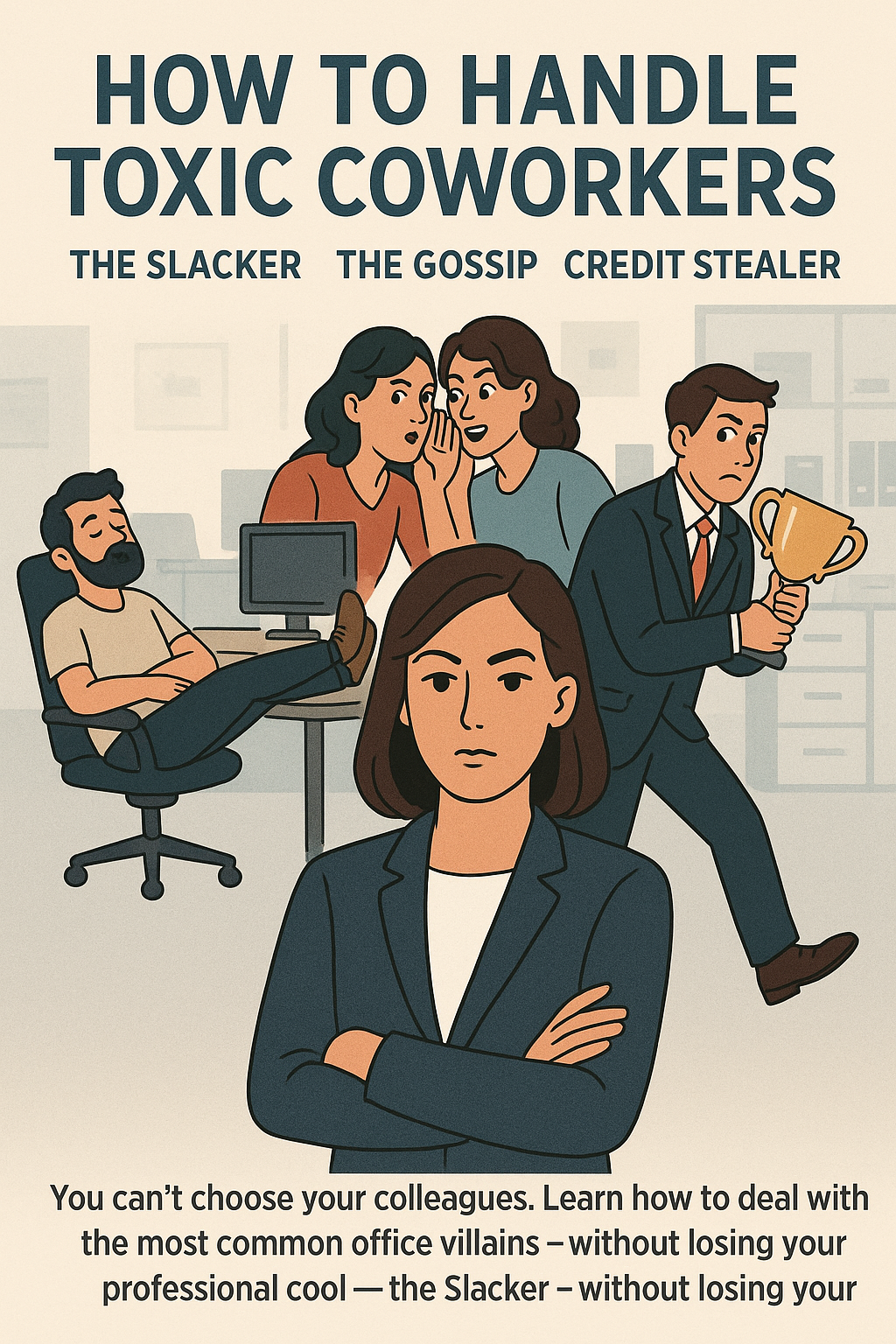
How to Handle Toxic Coworkers: The Slacker, The Gossip, and The Credit Stealer
You can't choose your colleagues. Learn how to deal with the most common office villains—the Credit Stealer, the Chronic Complainer, and the Slacker—without losing your professional cool.
2026-01-20

The 4-Day Work Week: Will AI Finally Make It a Reality?
Can Artificial Intelligence unlock the 4-day work week? We analyze how AI productivity tools could shorten the work week, the economic obstacles standing in the way, and how to position yourself for an output-based career.
2026-01-20

Best Answer to "What Is Your Greatest Weakness?"
Stop saying "I'm a perfectionist." Learn how to answer the "Greatest Weakness" interview question with authentic, safe examples that show growth and self-awareness.
2026-01-19
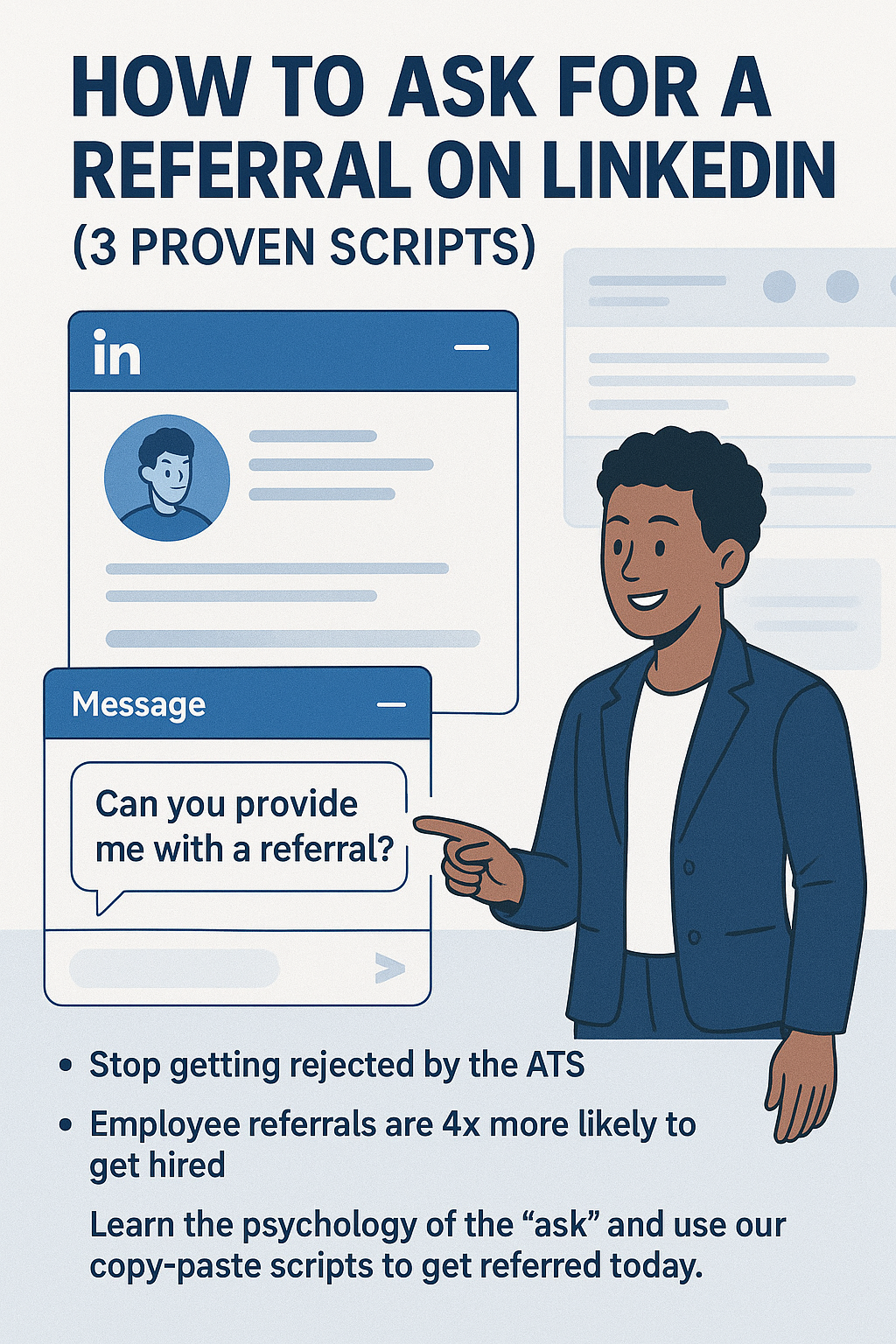
How to Ask for a Referral on LinkedIn (3 Proven Scripts)
Stop getting rejected by the ATS. Employee referrals are 4x more likely to get hired. Learn the psychology of the "ask" and use our copy-paste scripts to get referred today.
2026-01-08

Video Interview Tips: How to Ace Your Zoom & Teams Interview |
Nervous about your virtual interview? From lighting hacks to eye contact secrets, master these 7 video interview tips to look professional on Zoom, Google Meet, or Teams.
2026-01-08