


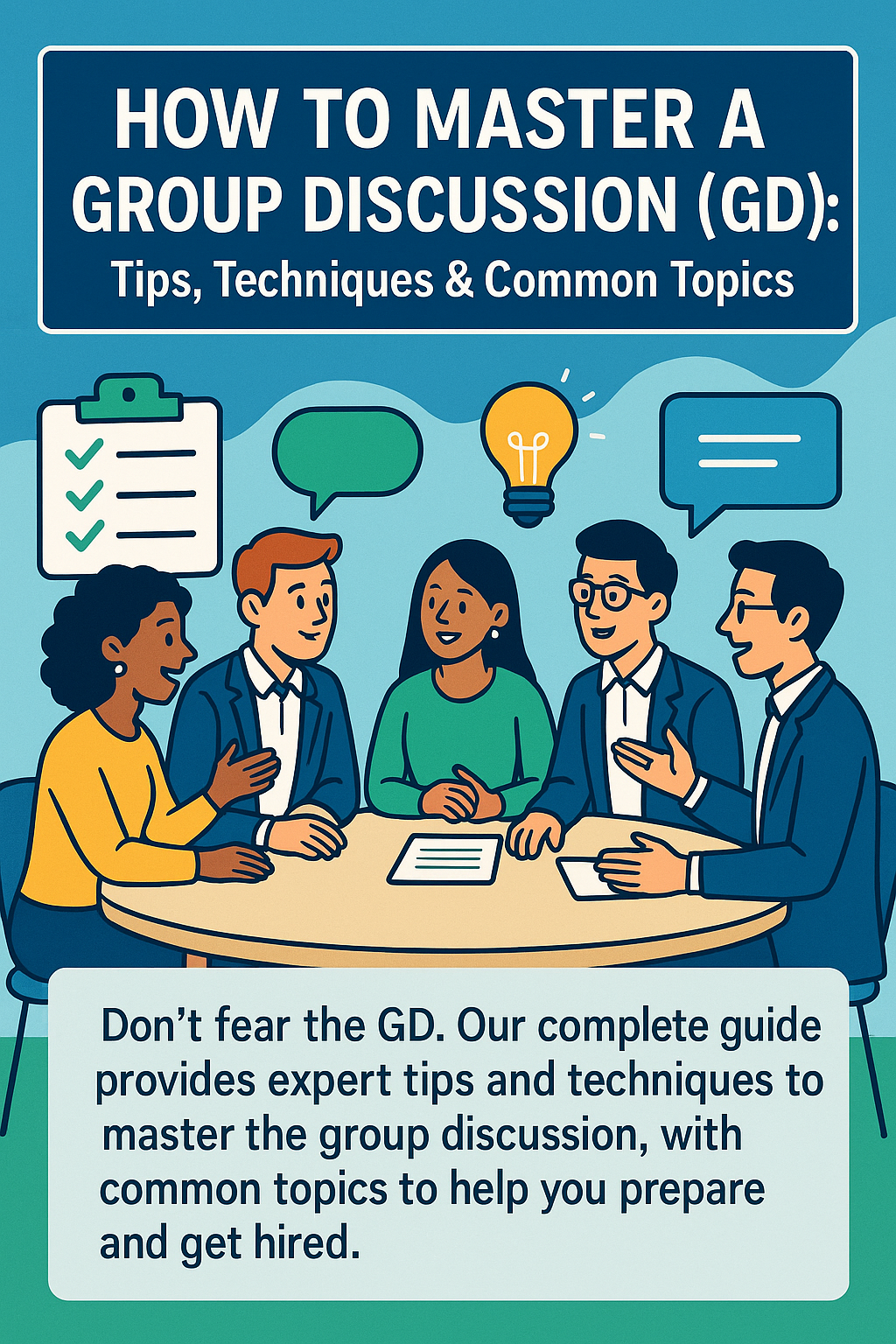
How to Master a Group Discussion (GD): Tips, Techniques, and Common Topics
For millions of students and freshers across India, the path to a coveted corporate job or admission into a top MBA program often runs through one of the most nerve-wracking and misunderstood hurdles: the Group Discussion (GD). After clearing the written aptitude test, you're ushered into a room with 10-15 other high-achieving candidates, given a topic you've possibly never considered before, and then given 20 minutes to "discuss" it, all while being silently judged by a panel of evaluators.
The entire experience can be chaotic and intimidating. You're trying to make your voice heard without shouting, you're trying to sound intelligent without sounding arrogant, and you're trying to make a lasting impression in a very short amount of time. Many bright, highly qualified candidates freeze in this high-pressure environment. They either stay silent, fearing they have nothing worthwhile to add, or they become overly aggressive, mistakenly believing that the loudest and most dominant speaker wins.
Both of these approaches are wrong. A Group Discussion is not a debate to be won, nor is it a test of your encyclopedic knowledge. It is a carefully designed psychological and professional assessment. Recruiters use the GD to evaluate a specific set of soft skills that are impossible to gauge from a resume or a one-on-one interview. They are testing your communication skills, your leadership potential, your teamwork and collaboration abilities, your problem-solving skills, and your confidence under pressure.
The good news is that performing well in a GD is a skill, and like any skill, it can be learned, practiced, and mastered. It's not about being the loudest; it's about being the most effective. This guide will provide you with a comprehensive framework, practical techniques, and a clear strategy to help you navigate the chaos and confidently showcase your best self in any group discussion.
Understanding What the Evaluators Are Really Looking For
Before you can formulate your strategy, you must understand the evaluation criteria. The moderators are not judging you on the correctness of your final conclusion, but on the process of how you get there. They are looking for candidates who demonstrate:
- Initiative (Leadership): Do you have the confidence to start the discussion?
- Communication Skills: Can you articulate your thoughts clearly, concisely, and persuasively? Are you an active listener?
- Knowledge and Substance: Do you have a logical, fact-based approach, or are you just speaking in vague opinions?
- Teamwork: Do you build on others' points? Do you encourage quieter members to speak? Do you show respect for differing opinions?
- Problem-Solving & Critical Thinking: Can you analyze the topic, break it down, and help guide the group toward a structured conclusion?
- Confidence & Poise: Do you maintain a calm, professional, and positive demeanor, even when challenged?
Your goal is to be a facilitator of a quality discussion, not a disruptive debater.
A Step-by-Step Strategy for Dominating Your GD
Follow this structure to make a powerful and positive impact from start to finish.
1. The Opening: How to Start a GD
The first two minutes are critical. The person who initiates the discussion often makes the strongest first impression, but only if they do it well. Don't just jump in. * The "Golden Minute": You will typically be given 1-2 minutes to gather your thoughts. Use this time to quickly jot down 3-4 key points related to the topic. Define the topic, think of its pros/cons, and consider some real-world examples. * A Framework for Opening: A great way to start is to define the topic and propose a structure for the discussion. > "Good morning everyone. The topic we have been given is [State the Topic]. I believe this refers to [briefly define the topic's core issue]. To have a structured discussion, I suggest we first explore the key causes of this issue, then move on to its impact, and finally, try to brainstorm some potential solutions. What does everyone think of that approach?" This shows leadership, clarity of thought, and a collaborative mindset all in one go.
2. The Body: How to Make Your Voice Heard
The middle of the GD is often the most chaotic. Here’s how to contribute effectively without being rude. * Quality Over Quantity: It is far better to make 3-4 high-quality, relevant points than to speak 10 times with no substance. * Build on Others' Points (The "Yes, and..." Technique): The best way to show you are a team player is to listen actively and build on what someone else has said. > "I'd like to build on what [Candidate's Name] just said. His point about [their point] is excellent, and I think it also connects to the larger issue of..." * Use Data and Examples: Don't just state opinions. Back them up with facts, data, or real-world examples. This gives your points weight and credibility. * The "Interruption" Technique (Polite Version): If you are in a very aggressive group, you will need to interject. The polite way to do this is to wait for a speaker to take a brief pause and then jump in with, "That's a very interesting point. If I could just add to that..." or "Pardon me for interjecting, but I have a related thought..."
3. Handling Conflict and Disagreements
You will almost certainly encounter someone who disagrees with you. How you handle this is a direct test of your emotional intelligence. * Never Attack the Person: Disagree with the point, not the person. * The Formula: "I understand your perspective on [their point], and you've raised a valid concern. However, I'd like to offer a different view. Have we considered that...?" This shows respect while confidently stating your own position.
4. The Closing: How to Summarize
In the last 2-3 minutes, the group will often be asked to conclude. This is your second "golden opportunity" to take a leadership role. * Volunteer to Summarize: "As we're nearing the end of our time, I'd like to try and summarize the key points our group has discussed." * Be Balanced: Your summary should be an objective overview of the entire discussion, not just your own points. Acknowledge the main viewpoints that were raised, including any points of disagreement. > "Our group had a very productive discussion. We identified that the main causes of [Topic] are [Point A] and [Point B]. We also discussed the significant impacts, with some of us, like [Name], focusing on [Viewpoint 1], while others highlighted [Viewpoint 2]. Finally, we proposed a few potential solutions, including [Solution A] and [Solution B]. While we didn't all agree on the best single solution, I believe we've successfully analyzed the topic from multiple valuable perspectives."
This demonstrates leadership, active listening, and the ability to synthesize complex information.
Common Group Discussion Topics
While the topics can be anything, they generally fall into three categories. 1. Current Affairs: (e.g., "The future of remote work in India," "AI and its impact on the job market," "Cryptocurrency: Fad or Future?") 2. Case Studies: A short business problem (e.g., "A company's sales are falling. What should they do?"). Here, you must use a structured problem-solving approach. 3. Abstract Topics: (e.g., "Red is better than blue," "Is honesty always the best policy?"). These are not about facts; they are designed purely to test your creative thinking, communication, and logical reasoning skills.
Final Pro-Tips for Success
- Body Language is Key: Sit up straight, maintain an open and confident posture, and make eye contact with everyone at the table, not just the evaluators.
- Don't Be a Wallflower: You must speak. Your silence will be interpreted as a lack of confidence or lack of knowledge.
- Don't Be a Bulldozer: Do not shout, point fingers, or interrupt aggressively. You will be immediately marked down for being a poor team player.
- Use a Pen and Paper: Taking brief notes shows you are engaged and helps you structure your thoughts.
Conclusion Mastering the Process
A Group Discussion is one of the most learnable parts of the hiring process. It’s a game with a clear set of rules. By understanding that the goal is collaboration, not domination, you can prepare a winning strategy.
Practice your communication skills, stay informed about current events, and, most importantly, walk in with a plan. Focus on being a confident, articulate, and respectful team player who guides the conversation forward. By doing so, you will not only pass the GD; you will leave a lasting impression that sets you apart from the competition.
Once you master the GD, you'll be on to the final interview. Make sure you are prepared for that next step by practicing with a comprehensive set of interview questions. A strong performance in the GD, combined with a powerful resume from the JobPe Resume Builder, is a surefire way to get ahead.
For more resources to help you ace every stage of the hiring process, https://jobpe.com.

Creative Content Writer
More from Debojyoti Roy
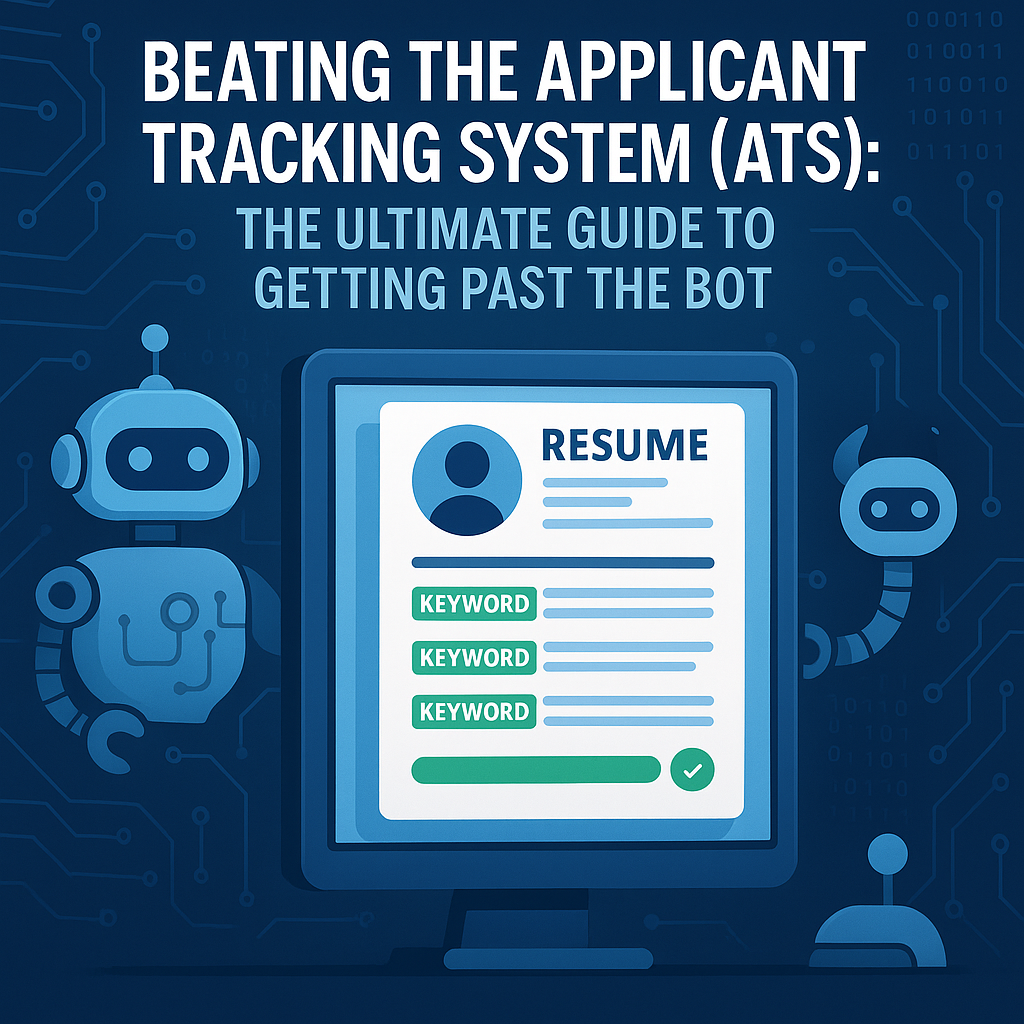
Beating the Applicant Tracking System (ATS): The Ultimate Guide to Getting Past the Bot
Is your resume getting rejected instantly? It might be the ATS. Learn how Applicant Tracking Systems work, how to format your resume to beat the bot, and the keyword strategies that get you noticed.
2025-12-10
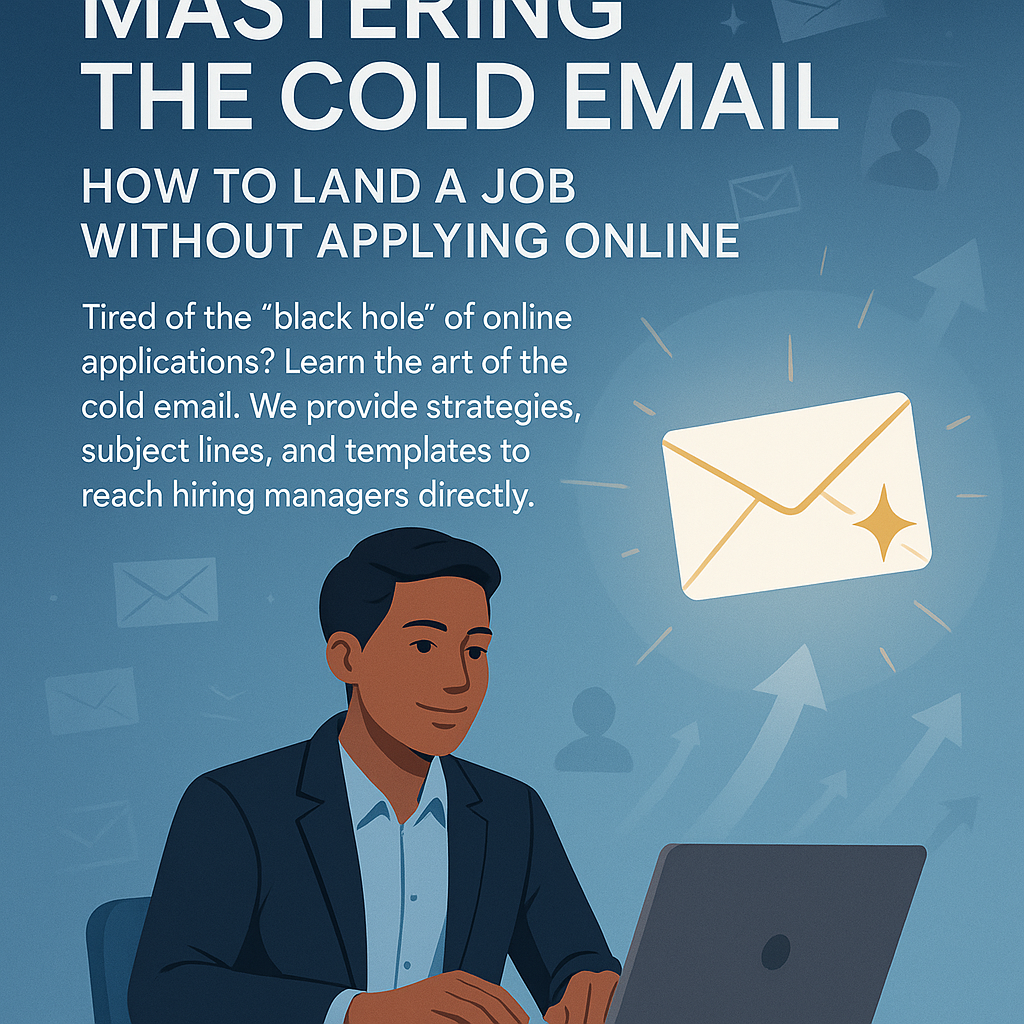
Mastering the Cold Email: How to Land a Job Without Applying Online
Tired of the "black hole" of online applications? Learn the art of the cold email. We provide strategies, subject lines, and templates to reach hiring managers directly.
2025-12-10
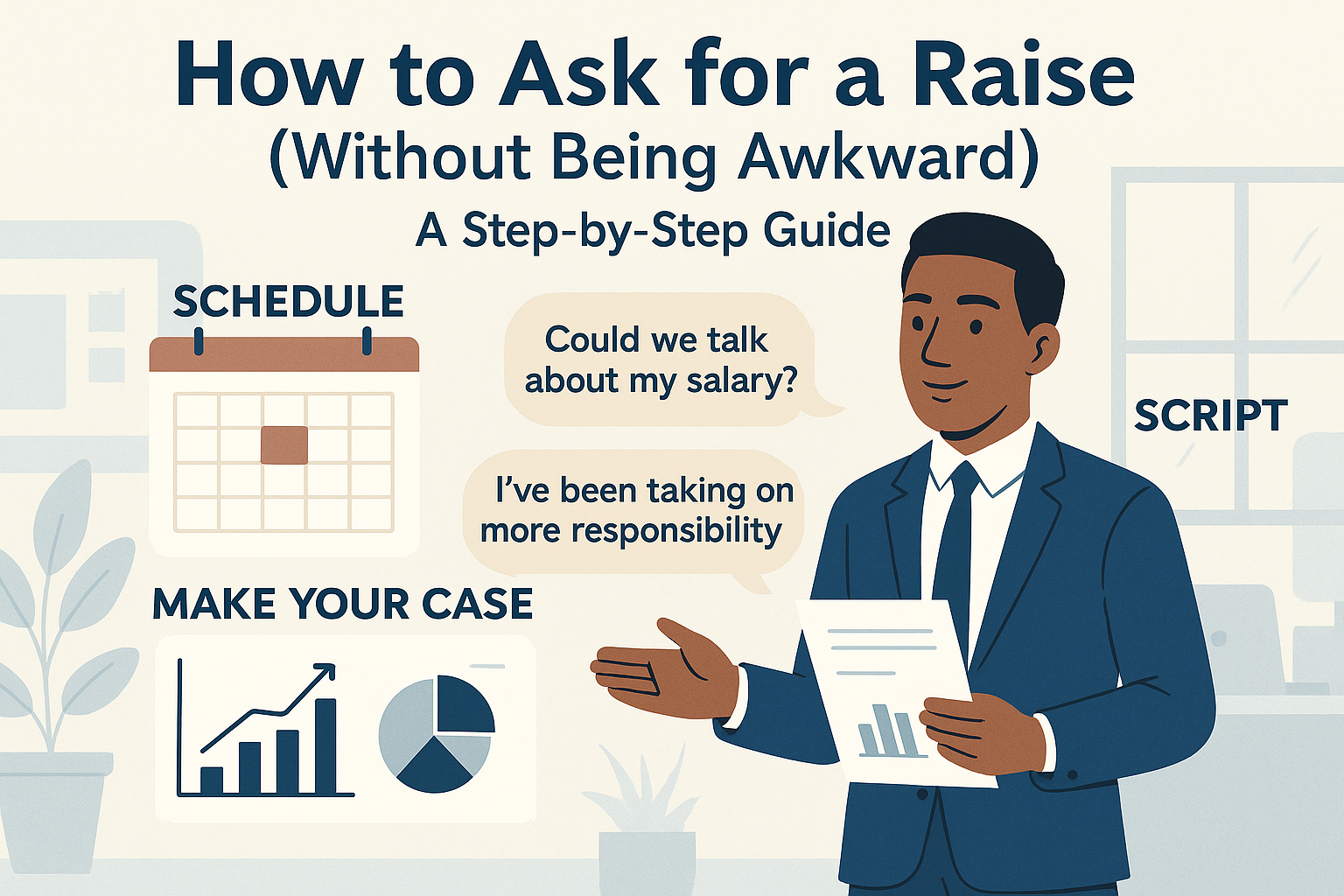
How to Ask for a Raise (Without Being Awkward): A Step-by-Step Guide
Don't wait for your annual appraisal. Learn the strategic way to ask for a raise, build your business case, and use our scripts to get the salary hike you deserve.
2025-12-10
The First 90 Days: A Strategic Plan to Impress Your New Boss
Your first 3 months in a new job determine your reputation. Use our 30-60-90 day plan to secure early wins, build relationships, and pass probation with flying colors.
2025-12-09
Background Verification (BGV) Explained: What Employers Actually Check (And What Gets You Rejected)
Worried about the background check? We decode the Background Verification (BGV) process in India, covering employment history, education checks, and how to handle discrepancies.
2025-12-09