


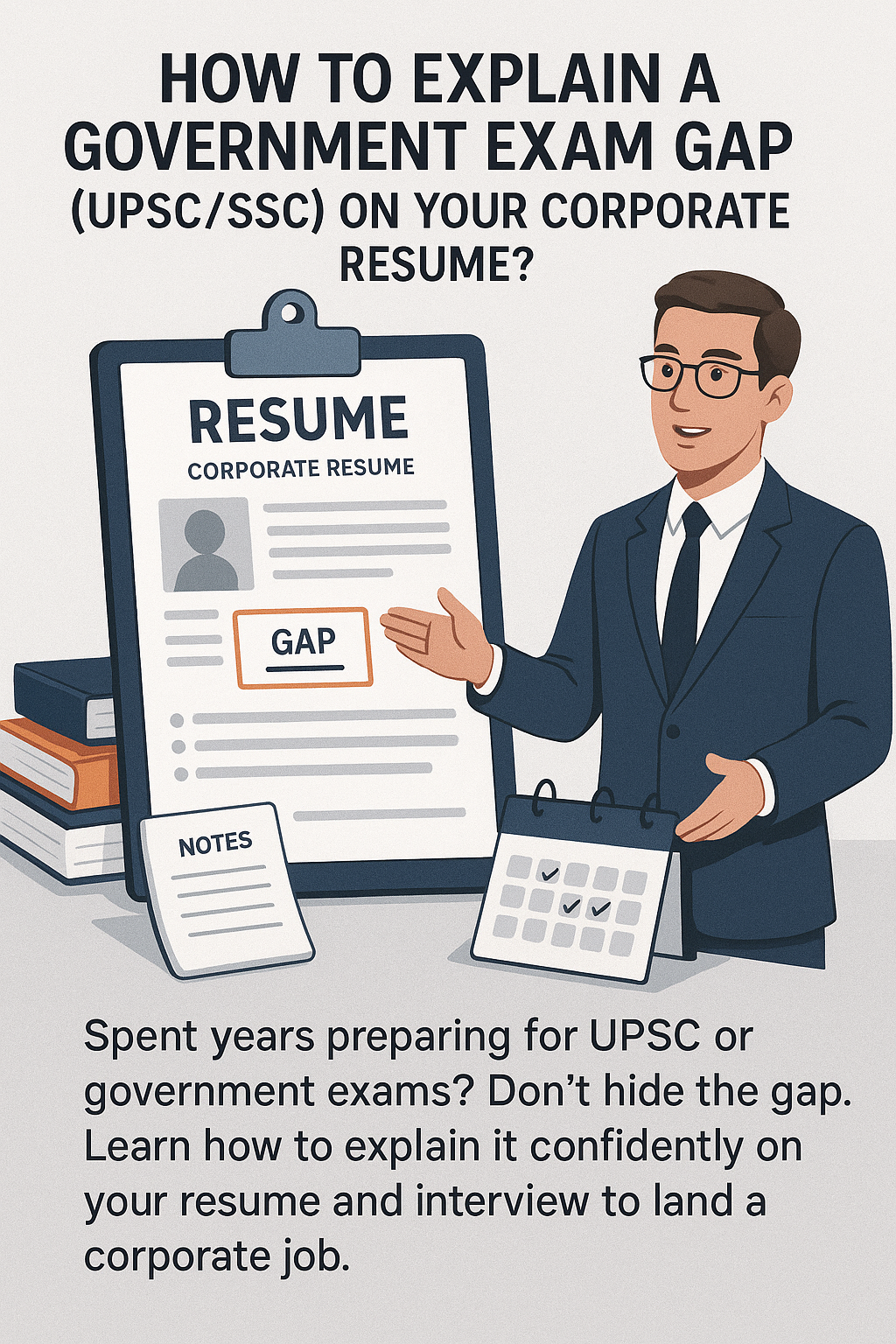
How to Explain a 'Government Exam' Gap (UPSC/SSC) on Your Corporate Resume
In India, the dream of a civil services career is powerful. Every year, millions of bright, ambitious graduates pause their corporate aspirations to dedicate themselves entirely to the grueling preparation for exams like the UPSC (Union Public Service Commission), SSC, or State PSCs. It is a journey of intense discipline, sacrifice, and rigorous study.
However, the statistical reality is that only a tiny fraction will clear these exams. For the vast majority, there comes a moment of hard recalibration—a decision to pivot back to the private sector. But as you update your resume, you face a glaring problem: a gap of one, two, or even three years where your official employment status was "Unemployed."
For many, this gap feels like a scar. You worry that recruiters will see it as "wasted time," or view you as a "failed" aspirant who is settling for a corporate job as a Plan B. You fear that your skills have rusted and that you are miles behind your peers who started working immediately after college.
Here is the truth you need to hear: Preparing for competitive exams is not "doing nothing." It is an intense intellectual pursuit that builds resilience, analytical thinking, general awareness, and disciplined work habits. The gap is not the problem; your defensiveness about the gap is the problem.
If you try to hide it or apologize for it, it looks like a weakness. If you own it and frame it as a period of focused goal pursuit and skill acquisition, it can be a neutral—or even positive—part of your story. This guide is your roadmap to bridging the gap between your UPSC journey and your corporate future.
Step 1: The Mindset Shift (Stop Calling it a "Failure")
Before you write a single word on your resume, you must change your internal narrative. You did not "waste" three years. * You analyzed complex subjects (History, Polity, Economics). * You developed a disciplined work routine (10+ hours of study/day). * You managed immense pressure and setbacks.
These are transferable soft skills. You are entering the corporate world not as a fresh college graduate, but as a mature individual with a high capacity for hard work. Walk into the job market with that confidence.
Step 2: How to Address the Gap on Your Resume
Do not leave a blank space. A 2-year unexplained gap invites negative speculation (Health issues? Fired? Lazy?). You must label the gap proactively.
Option A: The Honest "Sabbatical" Listing
If the gap is significant (2+ years), list it in your experience section, but keep it brief.
Independent Sabbatical – Competitive Exam Preparation | [City] [Start Date] – [End Date] * Dedicated period of full-time preparation for Civil Services Examinations (UPSC). * Developed advanced proficiency in research, data analysis, and general studies including Indian Economy and Polity. * Optional: Simultaneously pursued [Certification Name/Short Course] to maintain technical currency.
Option B: The "Skill-Based" Cover Up
If you did anything else during that time—freelancing, tutoring, helping with a family business, or volunteering—highlight that above the exam preparation.
Freelance Content Writer & Tutor [Start Date] – [End Date] * Managed content creation for [Client/Project], delivering 5 articles/week. * Tutored undergraduates in [Subject], improving student scores by 20%. * Note: This period coincided with preparation for competitive examinations.
This frames you as an active professional who was also studying, rather than just a student.
Step 3: Mastering the Interview Question ("So, why the gap?")
You will be asked. Do not look down, do not mumble. Look the interviewer in the eye and use the "Goal-Outcome-Pivot" formula.
1. The Goal (The "Why"): Explain your ambition. * "After graduation, I made a conscious decision to pursue a career in Civil Services because I wanted to work on large-scale policy implementation. It was a calculated risk I wanted to take early in my career."
2. The Outcome (The "What Happened"): Be honest but brief. * "I dedicated two years to rigorous preparation. I cleared the Prelims twice but unfortunately missed the Mains cutoff by a narrow margin. While the ultimate outcome wasn't what I hoped for, the journey taught me immense discipline, patience, and how to analyze vast amounts of data quickly."
3. The Pivot (The "Future"): Bring it back to the corporate job. * "I’ve realized that while I didn't enter the services, my drive to make an impact remains. I decided to pivot those skills to the corporate sector. I’ve spent the last 3 months upskilling in [Relevant Skill for Job, e.g., Data Analytics/Digital Marketing], and I’m now eager to bring that same level of dedication to a fast-paced environment like [Company Name], where I can see immediate results for my work."
Step 4: Bridge the Technical Gap (The "Proof of Readiness")
The recruiter's biggest fear isn't your failure; it's your rustiness. They worry you've forgotten your engineering or coding or business basics. You must prove them wrong before the interview.
- Get Certified: If you are an engineer, take a current coding course (like on JobPe's Coding Practice or Coursera). If you are in commerce, get a certification in Excel or Tally.
- Build a Project: Don't just study; build. Create a portfolio website, write a market analysis report, or do a small consulting project.
- Show, Don't Just Tell: "During my gap, I studied Polity" is weak. "During my gap, I studied Polity, but in the last 4 months, I also completed a Python bootcamp and built this sample app" is powerful.
Conclusion: Your Gap is a Chapter, Not the Whole Book
Millions of successful corporate leaders in India have a "UPSC gap" in their past. It is a common, respected part of the Indian career landscape. Employers value the ambition it takes to attempt it and the maturity it takes to move on from it.
Do not let those years define you as a "failed aspirant." Define yourself as a resilient professional who took a big shot, learned valuable lessons, and is now bringing that hunger to the private sector.
To find companies that value potential over perfect timelines, set up job alerts for "Entry Level" or "Associate" roles that match your new direction.
For more resources to help you restart your career engine, https://jobpe.com.

Creative Content Writer
More from Debojyoti Roy
Beating the Applicant Tracking System (ATS): The Ultimate Guide to Getting Past the Bot
Is your resume getting rejected instantly? It might be the ATS. Learn how Applicant Tracking Systems work, how to format your resume to beat the bot, and the keyword strategies that get you noticed.
2025-12-10
Mastering the Cold Email: How to Land a Job Without Applying Online
Tired of the "black hole" of online applications? Learn the art of the cold email. We provide strategies, subject lines, and templates to reach hiring managers directly.
2025-12-10
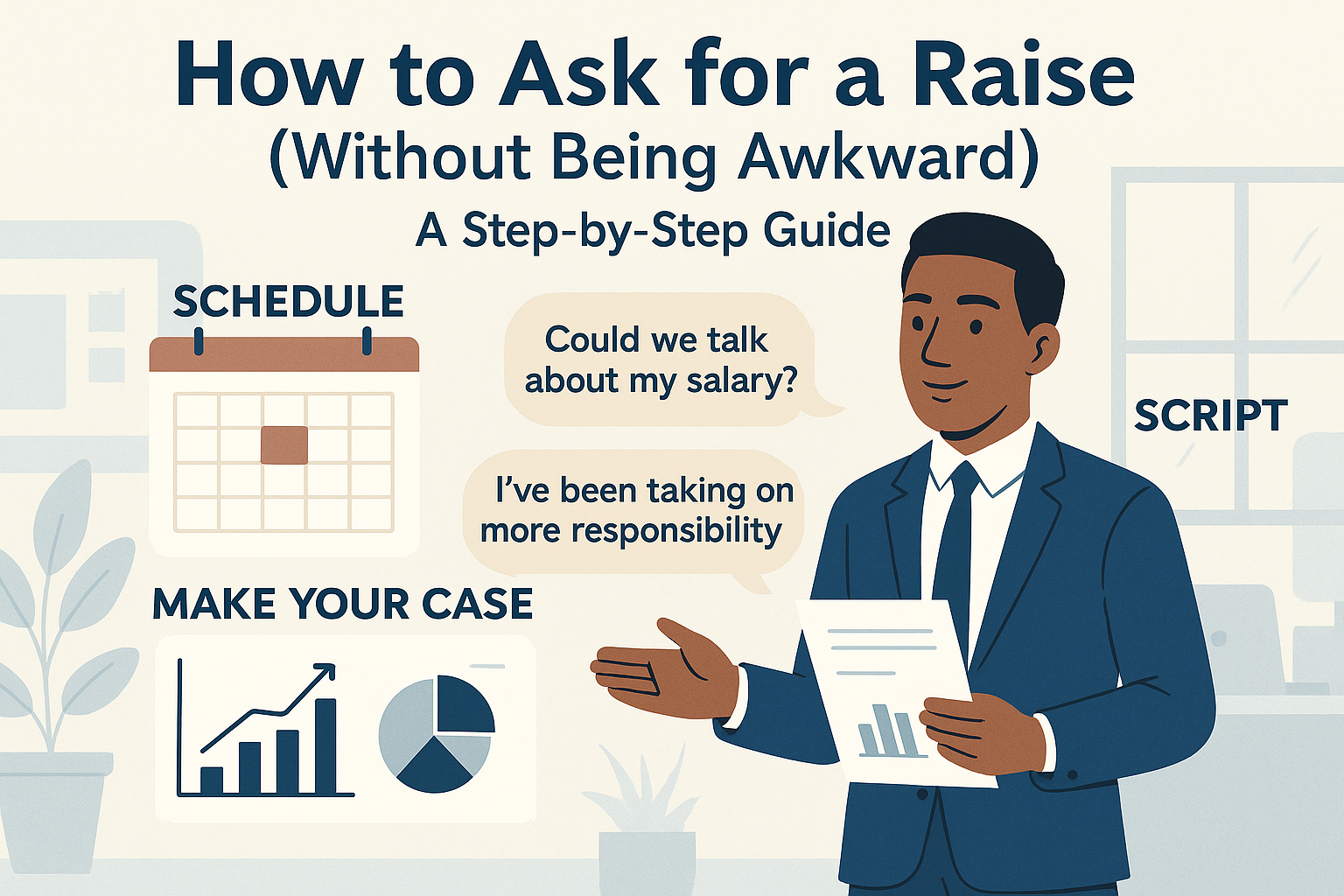
How to Ask for a Raise (Without Being Awkward): A Step-by-Step Guide
Don't wait for your annual appraisal. Learn the strategic way to ask for a raise, build your business case, and use our scripts to get the salary hike you deserve.
2025-12-10
The First 90 Days: A Strategic Plan to Impress Your New Boss
Your first 3 months in a new job determine your reputation. Use our 30-60-90 day plan to secure early wins, build relationships, and pass probation with flying colors.
2025-12-09
Background Verification (BGV) Explained: What Employers Actually Check (And What Gets You Rejected)
Worried about the background check? We decode the Background Verification (BGV) process in India, covering employment history, education checks, and how to handle discrepancies.
2025-12-09