


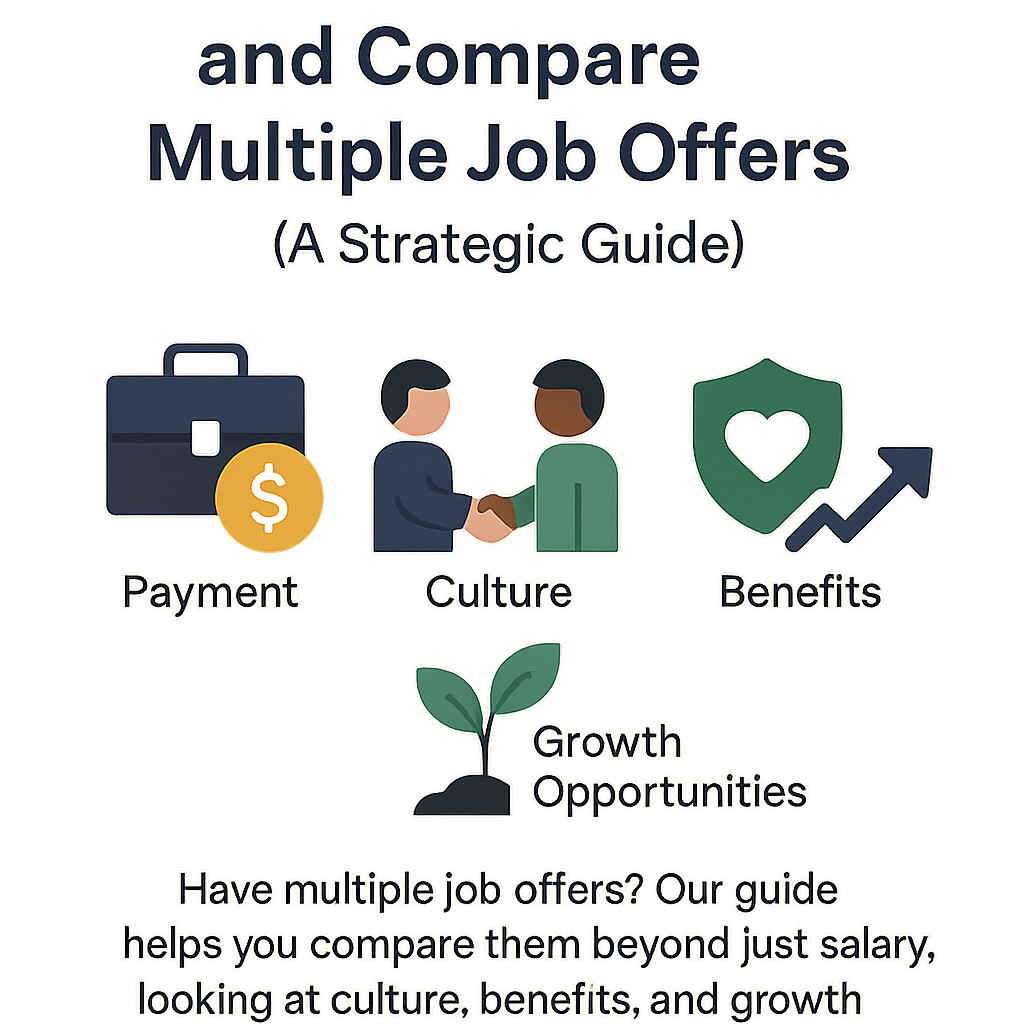
How to Evaluate and Compare Multiple Job Offers (A Strategic Guide)
In a challenging job search, your primary goal is to get just one "yes." But in a strong market, or after a particularly successful search, you may find yourself in a highly fortunate but incredibly stressful position: having to choose between two or more job offers. This is the ultimate "good problem to have," but it's a high-stakes decision that can feel just as anxiety-inducing as the search itself. Both companies want an answer, the clock is ticking, and the choice you make could set the entire course for the next chapter of your career.
When faced with multiple offers, the most common mistake is to simply compare the headline CTC (Cost-to-Company) figures and choose the one that's higher. This is a one-dimensional approach to a three-dimensional problem. A job is far more than just its salary. An offer with a slightly lower salary but a fantastic company culture, a shorter commute, better benefits, and a clearer path for growth will almost always lead to greater long-term happiness and career success than a high-paying job with a toxic environment.
To make the best decision, you need to move beyond a simple pro-con list and conduct a holistic, data-driven evaluation of each opportunity. This guide will provide you with a strategic framework to compare your job offers comprehensively, ensuring you make a confident, well-rounded choice that aligns with your personal, financial, and professional goals.
Step 1: Look Beyond the CTC (Deconstruct the Total Compensation)
First, you must get an apples-to-apples comparison of the financial packages. This means looking far beyond the CTC. Ask the HR department from each company for a detailed salary breakup.
- In-Hand Salary: What is the actual net, take-home pay you will receive each month after all deductions (PF, taxes, etc.)? A high-CTC offer with a large, non-guaranteed variable component might have a lower in-hand salary than a more straightforward, lower-CTC offer.
- Variable Pay & Bonuses: Is the bonus guaranteed, or is it discretionary and based on company performance? A "guaranteed 10% bonus" is real money; an "up to 20% performance bonus" is a possibility, not a promise.
- Long-Term Incentives (Stock/ESOPs): For startups and public companies, stock options (ESOPs) or Restricted Stock Units (RSUs) can be a significant part of your compensation. Analyze their potential value and, most importantly, the vesting schedule.
- Benefits Package: Do not underestimate this. Compare the quality of the health insurance (coverage amount, family inclusion), retirement contributions (is there a matching PF contribution above the minimum?), and any other perks like life insurance, wellness stipends, or childcare benefits. These have a real, tangible financial value.
Step 2: Evaluate the Role and Responsibilities
Now, look at the job itself. This is what you will be doing every single day. * Day-to-Day Work: Which role sounds more interesting, challenging, and engaging? Read the job descriptions side-by-side. Will one role have you doing exciting new things while the other has you stuck in maintenance tasks? * Skill Utilization vs. Skill Growth: Which job offers the best balance between leveraging your existing strengths and forcing you to learn new, in-demand skills? A job that only uses your old skills can lead to stagnation, while one that is 100% new territory might be overly stressful. Look for a role that offers both. * Your Direct Manager: You've met your potential boss in the interview. This relationship is one of the single biggest factors in your day-to-day happiness. Where did you feel a stronger rapport? Which manager seemed more like a mentor and an advocate, and which seemed more like a micromanager? Trust your gut.
Step 3: Analyze the Company Culture and Work Environment
A great salary in a toxic culture is a recipe for misery. * Work-Life Balance: What did you learn about the expected working hours? Did one company proudly talk about its flexible schedules and remote work options, while the other hinted at regular weekend work? Be honest with yourself about the lifestyle you want. * Company Values and Vibe: Think back to the entire interview process. Did the people seem stressed and formal, or collaborative and energetic? Did the company's stated values (which you can find on their company profile) feel genuine, or just like a marketing slogan? * Your Commute: This is a simple but critical logistical point. A job that adds an extra 90 minutes of commuting to your day, every day, will have a serious negative impact on your health and personal time. Calculate the real-world cost of your commute in both time and money.
Step 4: Map Out the Long-Term Growth Potential
A job is a step in your career, not the final destination. * Career Pathing: Which company offers a clearer path for advancement? In your interviews, did one manager talk about a 5-year growth plan, while the other seemed focused only on the immediate role? * Learning & Development: Does the company have a formal mentorship program? Do they offer a budget for online courses, certifications, or conferences? A company that invests in your learning (like on a platform like Allrounder.ai) is investing in your future. * Internal Mobility: Does the company have a culture of promoting from within or allowing employees to move between departments? This "internal mobility" can be a huge advantage for long-term career growth.
Step 5: Use Your Leverage (The Professional Negotiation)
Having multiple offers is the ultimate point of leverage in a job search. You can, and should, use this leverage professionally to improve your preferred offer. * Identify Your "First Choice": Based on the steps above, decide which job you actually want, assuming all financial aspects were equal. * Call Your First Choice: Get the HR manager or recruiter on the phone. Be polite, professional, and enthusiastic. * The Script: "Thank you again so much for the offer. I am incredibly excited about the role and the team at [Company A]. As I'm in the final stages of my decision-making, I have also received another offer from [Company B] with a base salary of [Higher Amount]. My strong preference is to join your team, but the financial difference is a significant factor for me to consider. I was wondering if there is any flexibility in your original compensation package to help make this decision easier for me."
This approach is non-confrontational, honest, and positions you as a high-demand candidate. It gives your preferred company a clear, actionable target to meet or beat, and it often results in an improved offer.
Step 6 Make Your Decision and Don't Look Back
The most powerful tool for this entire process is a Decision Matrix. Create a simple spreadsheet. In the rows, list all the factors that matter to you (Base Salary, Bonus, Commute, Work-Life Balance, Growth Potential, Manager Vibe, etc.). In the columns, put "Offer A" and "Offer B."
Give each factor a "Weight" from 1-5 on how important it is to you (e.g., "Salary" might be a 5, "Commute" might be a 4). Then, score each offer from 1-10 on how well it delivers on that factor. Multiply the score by the weight to get a total for each factor. Sum up the totals at the bottom. The numbers will often reveal a clear winner that your emotions might have been clouding.
Once you have this data, make your final decision. Accept the offer you've chosen, and then, politely and professionally decline the other offers. Don't just "ghost" the other company. A simple, respectful email maintains your professional reputation and keeps that bridge intact for the future.
Conclusion: Choosing Your Next Chapter
Having multiple job offers is a test of your priorities. By moving beyond a simple salary comparison and strategically evaluating each opportunity against your full set of career goals, you can turn a stressful decision into an empowered one. Trust your research, trust your data, and trust your gut. You've earned the right to choose, so choose the path that sets you up for the greatest long-term success and happiness.
A great job search, from building a resume with the JobPe Resume Builder to preparing for interview questions, leads to great offers. To get more high-quality offers like these, make sure your job alerts are always active and optimized.
For more tools and resources to help you navigate every stage of your career journey, https://jobpe.com.

Creative Content Writer
More from Debojyoti Roy
Beating the Applicant Tracking System (ATS): The Ultimate Guide to Getting Past the Bot
Is your resume getting rejected instantly? It might be the ATS. Learn how Applicant Tracking Systems work, how to format your resume to beat the bot, and the keyword strategies that get you noticed.
2025-12-10
Mastering the Cold Email: How to Land a Job Without Applying Online
Tired of the "black hole" of online applications? Learn the art of the cold email. We provide strategies, subject lines, and templates to reach hiring managers directly.
2025-12-10
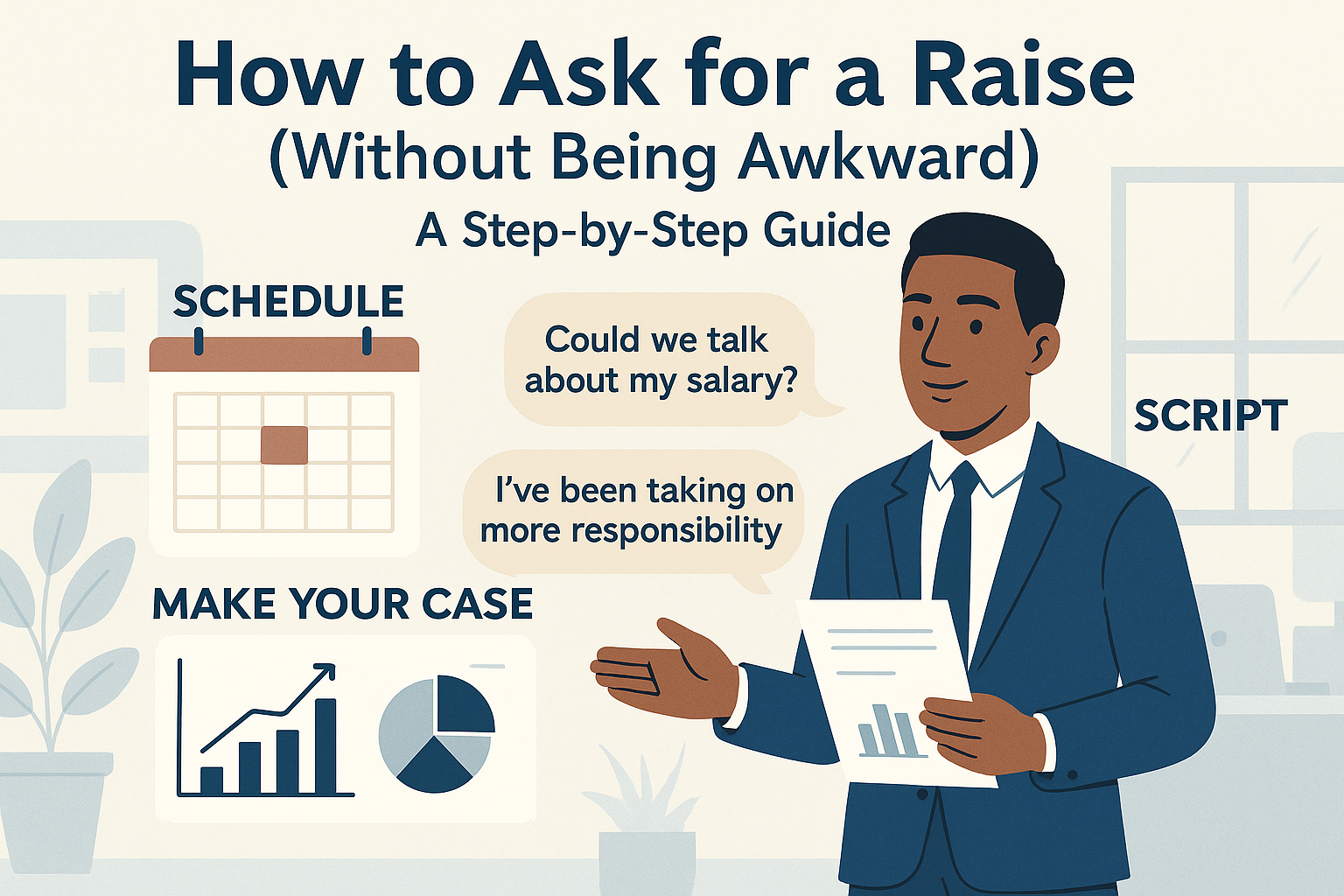
How to Ask for a Raise (Without Being Awkward): A Step-by-Step Guide
Don't wait for your annual appraisal. Learn the strategic way to ask for a raise, build your business case, and use our scripts to get the salary hike you deserve.
2025-12-10

The First 90 Days: A Strategic Plan to Impress Your New Boss
Your first 3 months in a new job determine your reputation. Use our 30-60-90 day plan to secure early wins, build relationships, and pass probation with flying colors.
2025-12-09
Background Verification (BGV) Explained: What Employers Actually Check (And What Gets You Rejected)
Worried about the background check? We decode the Background Verification (BGV) process in India, covering employment history, education checks, and how to handle discrepancies.
2025-12-09