


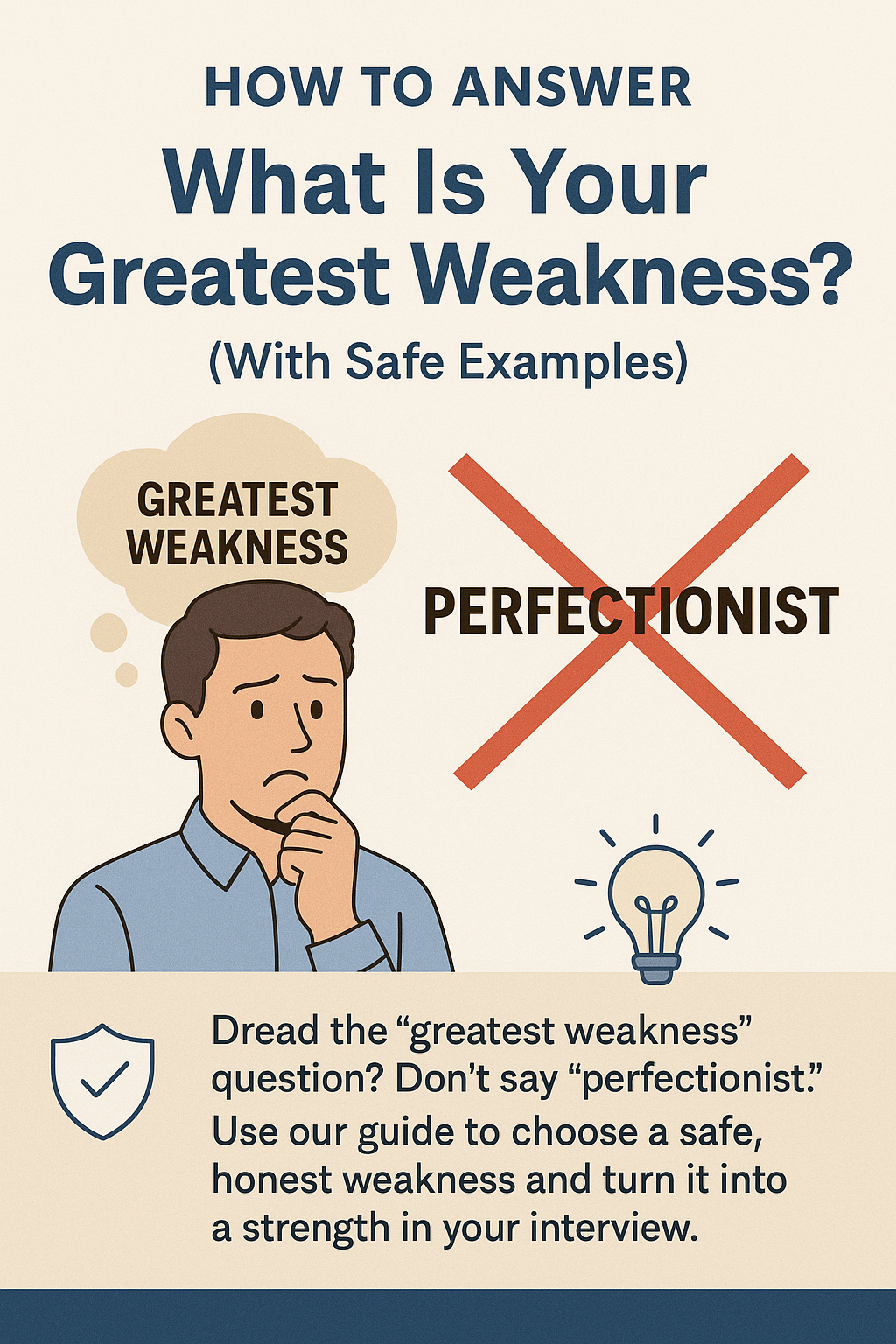
How to Answer "What Is Your Greatest Weakness?" (With Safe Examples)
It is the moment every candidate dreads. The interview is going smoothly, you are hitting all the right notes about your skills and achievements, and then the interviewer drops the bomb: "So, what would you say is your greatest weakness?"
Instantly, your brain freezes. It feels like a trap. If you are too honest ("I'm always late" or "I hate working with people"), you blow the interview. If you give a cliché, fake answer ("I work too hard" or "I'm a perfectionist"), you look disingenuous and un-self-aware.
This question is designed to make you uncomfortable. It strips away the rehearsed polish of your "strengths" and tests your character. But contrary to popular belief, the interviewer is not looking for a reason to reject you. They are looking for self-awareness and coachability.
They want to know: Do you know what you are bad at? Do you have the humility to admit it? And most importantly, do you have a plan to manage it so it doesn't hurt the team?
A good answer to this question can actually be a major point in your favor. It shows maturity and a growth mindset. This guide will teach you the formula for the perfect "weakness" answer and provide you with safe, professional examples that you can adapt to your own experience.
The Formula: Real Weakness + The Fix
The secret to acing this question is not to hide the weakness, but to sandwich it inside a story of improvement.
- State the Weakness Clearly: Choose a real, professional weakness (not a personal one). Be brief.
- Give Context: Explain how it has affected your work in the past (briefly).
- The Fix (The Most Important Part): Spend 70% of your answer explaining the specific steps you are taking to improve or manage this weakness. Show, don't just tell, that you are working on it.
What to Avoid (The "Fail" Answers)
- The Humblebrag: "I'm a perfectionist" or "I care too much." Recruiters hate this. It signals a lack of honesty.
- The Deal-Breaker: Never choose a weakness that is a core requirement of the job. If you are applying for Sales, don't say you are shy. If you are applying for Accountant, don't say you are bad at details.
- The "I Have None": This is the worst answer. It screams arrogance or lack of experience.
5 Safe, Professional Weaknesses (With Example Scripts)
Here are five categories of weaknesses that are generally "safe" because they are common, fixable, and not usually fatal to job performance.
1. Struggle with Delegation (The "Control Freak" Pivot)
Best for: Individual contributors moving into leadership, or high-performers.
The Script:
"I sometimes struggle with delegation. In the past, I’ve had a tendency to take on too much work myself to ensure it’s done 'perfectly,' rather than trusting others. I realized this was leading to burnout and slowing down the team.
The Fix: Recently, I’ve been using a project management tool to assign tasks clearly, and I’ve made a conscious effort to do regular check-ins rather than doing the work myself. I've found that this actually empowers my team and frees me up for more strategic work."
2. Discomfort with Public Speaking
Best for: Roles that are primarily desk-based or technical (e.g., Developer, Analyst).
The Script:
"Public speaking has always been a challenge for me. I tend to get nervous when presenting to large groups, and in the past, I would avoid opportunities to speak up in big meetings.
The Fix: I know communication is important, so I’ve started taking small steps to improve. I volunteered to lead our internal weekly team stand-up to get more comfortable with a smaller audience. I also recently took a presentation skills workshop on LinkedIn Learning to help structure my thoughts better."
3. Too Critical of Yourself (or Others)
Best for: Quality Assurance, Editors, or roles requiring high standards.
The Script:
"I can be overly critical of my own work. I often spend too much time tweaking the final 5% of a project to make it 'perfect,' which can sometimes impact my speed or stress levels.
The Fix: I’ve been practicing the 'done is better than perfect' approach for non-critical tasks. I now set strict time limits for the revision phase of my projects. This helps me maintain high quality without getting stuck in analysis paralysis."
4. Difficulty Saying "No" (The People Pleaser)
Best for: Support roles, Client Success, or Junior employees.
The Script:
"I have a hard time saying 'no' to requests. I naturally want to help, so I used to agree to every new project or favor, which resulted in me being overloaded and stressed.
The Fix: I now use a priority matrix to evaluate new requests against my current workload. If I'm at capacity, I’ve learned to communicate that professionally by saying, 'I can help with that, but it would mean pushing [Project X] to next week. Which is the higher priority?' This has helped me manage my time much more effectively."
5. Lack of Experience in a Non-Essential Skill
Best for: Anyone. Choose a skill that is nice-to-have but not a deal-breaker (e.g., a specific software).
The Script:
"While I’m very proficient in [Core Skill A] and [Core Skill B], I am not as familiar with [Non-Essential Skill, e.g., Python or a specific CRM] as I would like to be. I know it’s becoming more common in the industry.
The Fix: I’ve already started an online course to learn the basics, and I’m dedicating two hours a week to practicing it. I’m a fast learner, so I’m confident I’ll be up to speed quickly."
Conclusion: Vulnerability is Strength
When you answer this question well, you change the dynamic of the interview. You stop trying to be a "perfect candidate" and start being a "real professional."
Pick one of these examples that rings true for you. Tailor the "Fix" section to include a real app, course, or method you are using. When you show the interviewer that you are actively managing your own growth, your weakness stops being a liability and starts being a proof point for your ambition.
To make sure you're ready for the rest of the behavioral questions, keep practicing with our comprehensive interview questions database.
For more tools to help you navigate the toughest parts of the hiring process, https://jobpe.com.

Creative Content Writer
More from Debojyoti Roy
Beating the Applicant Tracking System (ATS): The Ultimate Guide to Getting Past the Bot
Is your resume getting rejected instantly? It might be the ATS. Learn how Applicant Tracking Systems work, how to format your resume to beat the bot, and the keyword strategies that get you noticed.
2025-12-10
Mastering the Cold Email: How to Land a Job Without Applying Online
Tired of the "black hole" of online applications? Learn the art of the cold email. We provide strategies, subject lines, and templates to reach hiring managers directly.
2025-12-10
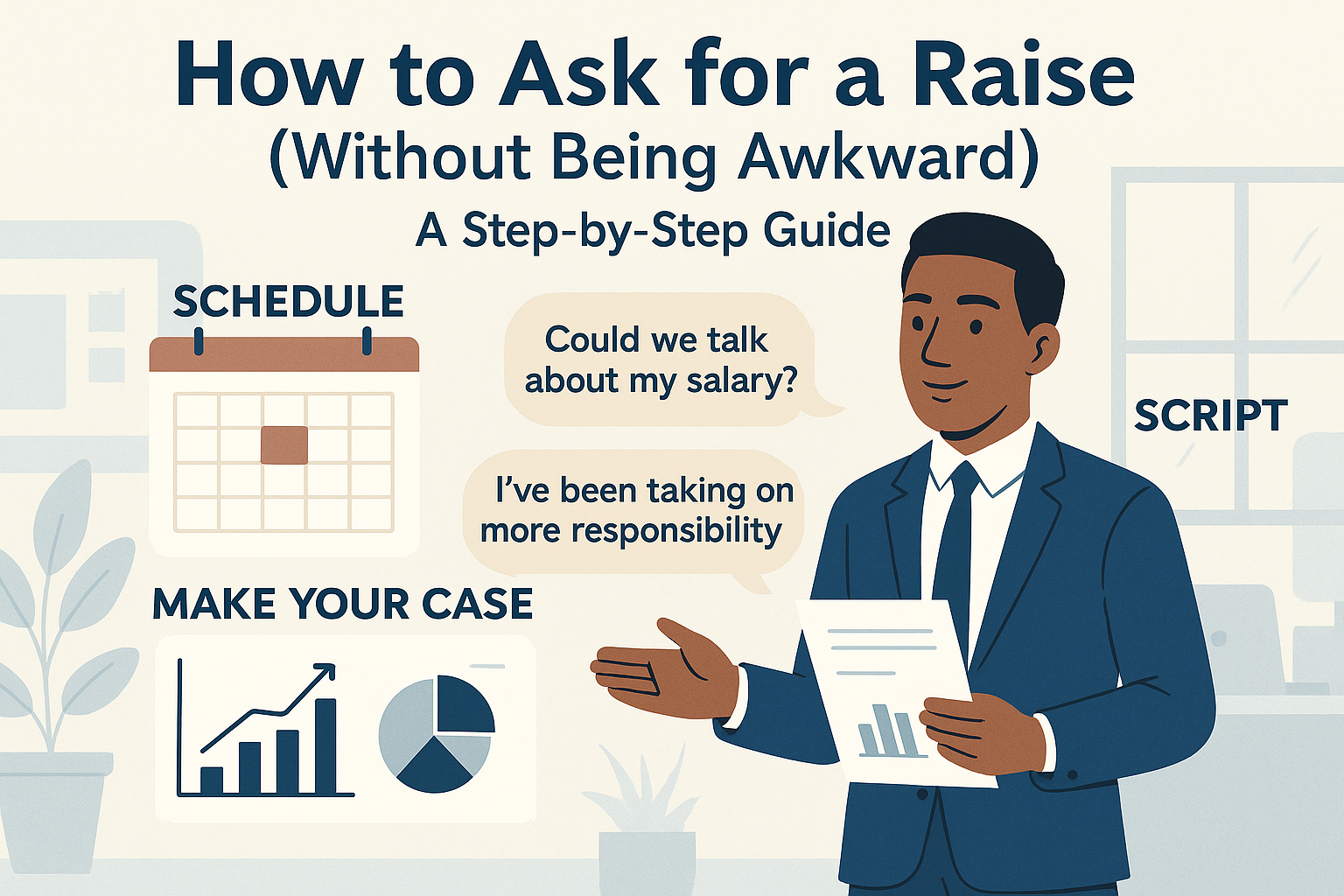
How to Ask for a Raise (Without Being Awkward): A Step-by-Step Guide
Don't wait for your annual appraisal. Learn the strategic way to ask for a raise, build your business case, and use our scripts to get the salary hike you deserve.
2025-12-10
The First 90 Days: A Strategic Plan to Impress Your New Boss
Your first 3 months in a new job determine your reputation. Use our 30-60-90 day plan to secure early wins, build relationships, and pass probation with flying colors.
2025-12-09
Background Verification (BGV) Explained: What Employers Actually Check (And What Gets You Rejected)
Worried about the background check? We decode the Background Verification (BGV) process in India, covering employment history, education checks, and how to handle discrepancies.
2025-12-09