


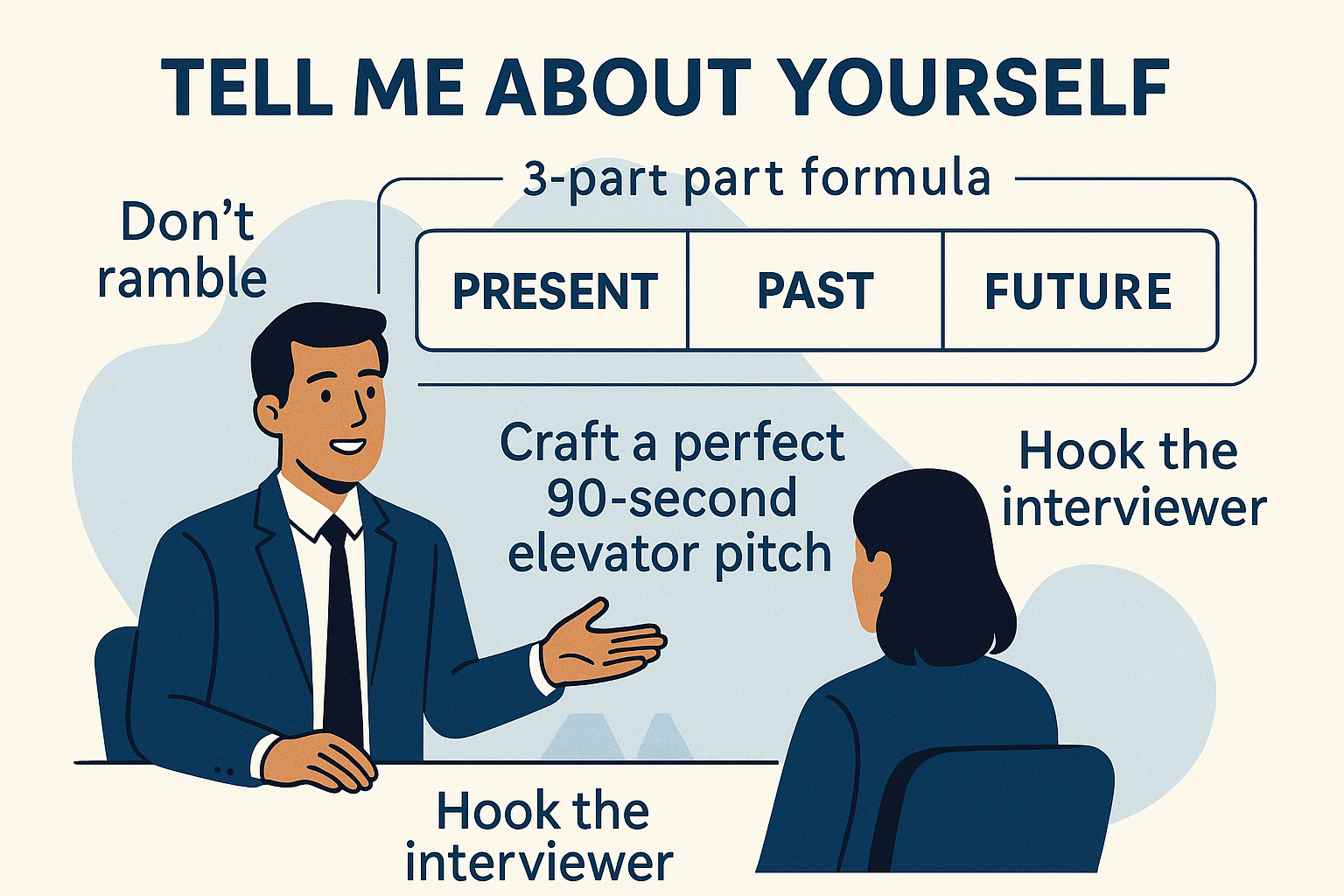
How to Answer "Tell Me About Yourself": The Ultimate 3-Part Formula
You walk into the interview room (or log into the Zoom call), shake hands, and sit down. The small talk fades, the interviewer looks at your resume, looks up at you, and asks the inevitable opening question: "So, tell me a little about yourself."
It sounds like the easiest question in the world. After all, you are the world's leading expert on the subject of you. Yet, this open-ended invitation is where most candidates stumble right out of the gate.
Some candidates recite their entire resume line-by-line, boring the interviewer within two minutes. Others launch into a personal biography, talking about their hobbies, their childhood, or their family. Some freeze up and give a vague, 10-second answer like, "Well, I'm a hard worker looking for a job."
Here is the secret: The interviewer does not want your life story. They do not want a dramatic reading of your resume. What they are actually asking is: "Give me a 90-second executive summary of your professional value and tell me why you are sitting in that chair right now."
This is your Elevator Pitch. It is your chance to set the narrative arc for the entire interview. A strong answer builds immediate confidence and rapport; a weak one puts you on the defensive for the rest of the hour.
This guide will teach you the foolproof "Present, Past, Future" formula to craft a concise, compelling, and tailored answer that hooks the interviewer from the very first minute.
The Formula: Present, Past, Future
The perfect answer follows a chronological arc, but not in the order you might think. It moves from where you are, to how you got there, to where you want to go next.
Part 1: The Present (Who You Are Now)
Start strong with your current professional identity. Give a snapshot of your current role, your scope, and a recent big win. * The Goal: Establish credibility immediately. * The Template: "Currently, I am a [Current Job Title] at [Current Company], where I focus on [Core Responsibility]. Recently, I’ve been leading [Major Project/Achievement]."
Part 2: The Past (How You Got Here)
Now, rewind briefly. Pick 2-3 key highlights from your background that are relevant to the job you are interviewing for. You don't need to mention every job; just the ones that built the skills you need for this role. * The Goal: Show a logical progression of skills and experience. * The Template: "Before that, I worked at [Previous Company] as a [Previous Title]. That experience really gave me a strong foundation in [Skill A] and [Skill B]. I also realized during that time that I had a real passion for [Specific Aspect of the Work]."
Part 3: The Future (Why You Are Here)
This is the "landing." Pivot from your history to the present moment. Explain why you are looking for a new challenge and, crucially, why you want this specific job. * The Goal: Connect your skills to their needs. * The Template: "But now, I’m looking to take the next step in my career. I’m looking for a role where I can [Goal], which is why I was so excited to see this opening at [Company Name]. Your focus on [Company Mission/Project] aligns perfectly with my background, and I see this as the perfect place to apply my skills in [Skill]."
Examples in Action
Example 1: The Experienced Professional (Marketing Manager)
Present: "Sure. Currently, I’m a Digital Marketing Manager at TechFlow, where I oversee a team of five. My main focus is on lead generation for our B2B software products. Just last quarter, my team launched a new campaign that increased our inbound leads by 40%." Past: "I’ve been in marketing for about seven years now. I started my career as a Content Writer at a small agency, which taught me how to craft a message. Then I moved into a broader strategist role where I really honed my skills in SEO and data analytics." Future: "While I love my current team, our strategy is shifting away from the B2B space. I’m really looking for a role where I can continue to specialize in enterprise B2B marketing and tackle larger-scale challenges. That’s why I applied to [Company Name]; you are the leader in this space, and I’d love to bring my lead-gen experience to your team."
Example 2: The Fresher (Recent Graduate)
Present: "Certainly. I am a recent Computer Science graduate from [University Name]. I have a strong passion for backend development, specifically working with Python and Java." Past: "During my degree, I completed two internships. The first was at a fintech startup where I helped debug their payment gateway. For my final year project, I built a machine-learning model that predicted stock prices with 85% accuracy. That project really taught me how to manage large datasets and work under tight deadlines." Future: "Now that I’ve graduated, I’m looking for a Junior Developer role where I can apply those coding skills in a real-world environment and learn from a strong engineering team. I’ve been following [Company Name]’s open-source contributions for a while, and I would love the opportunity to start my career here."
Example 3: The Career Changer (Teacher to Corporate Trainer)
Present: "Currently, I am a High School History Teacher with over 8 years of experience in curriculum design and classroom management." Past: "While I love teaching, I’ve found that my real strength lies in the adult learning and professional development side of things. Over the last two years, I’ve taken on a leadership role mentoring new teachers and designing district-wide training workshops. I discovered I really enjoy the corporate training methodology." Future: "That’s why I’m pivoting my career into Corporate Learning & Development. I’m looking for a role where I can transfer my skills in engagement and instructional design to a business setting. Your company’s commitment to employee upskilling is impressive, and I think my background would offer a fresh and effective perspective to your L&D team."
What to Avoid (The Common Traps)
- The "Resume Recitation": "First I did this, then I did this, then I did this..." Boring. Focus on the highlights.
- The "TMI" (Too Much Information): "I was born in Mumbai, I have two cats, and I love cricket." Keep it professional. Save the hobbies for later if asked.
- The "Modesty" Trap: Don't downplay yourself. This is a commercial for you. Use confident language ("I led," "I managed," "I built").
- The "Ramble": Keep it under 2 minutes. If you see the interviewer's eyes glaze over, wrap it up.
Conclusion: You Control the Narrative
The "Tell me about yourself" answer is the only part of the interview you can script 100% in advance. Do not waste this opportunity. Write down your 3-part answer today. Practice it in the mirror. Record yourself on your phone.
When you nail this opening, you relax. The interviewer relaxes. You have established yourself as a clear, articulate professional who knows their value. The rest of the interview is just filling in the details.
To ensure your resume sets you up for this perfect intro, give it a quick polish with the JobPe Resume Builder. And to find more interviews where you can use your new pitch, keep your job alerts running.
For more tools to master your interview skills, https://jobpe.com.

Creative Content Writer
More from Debojyoti Roy
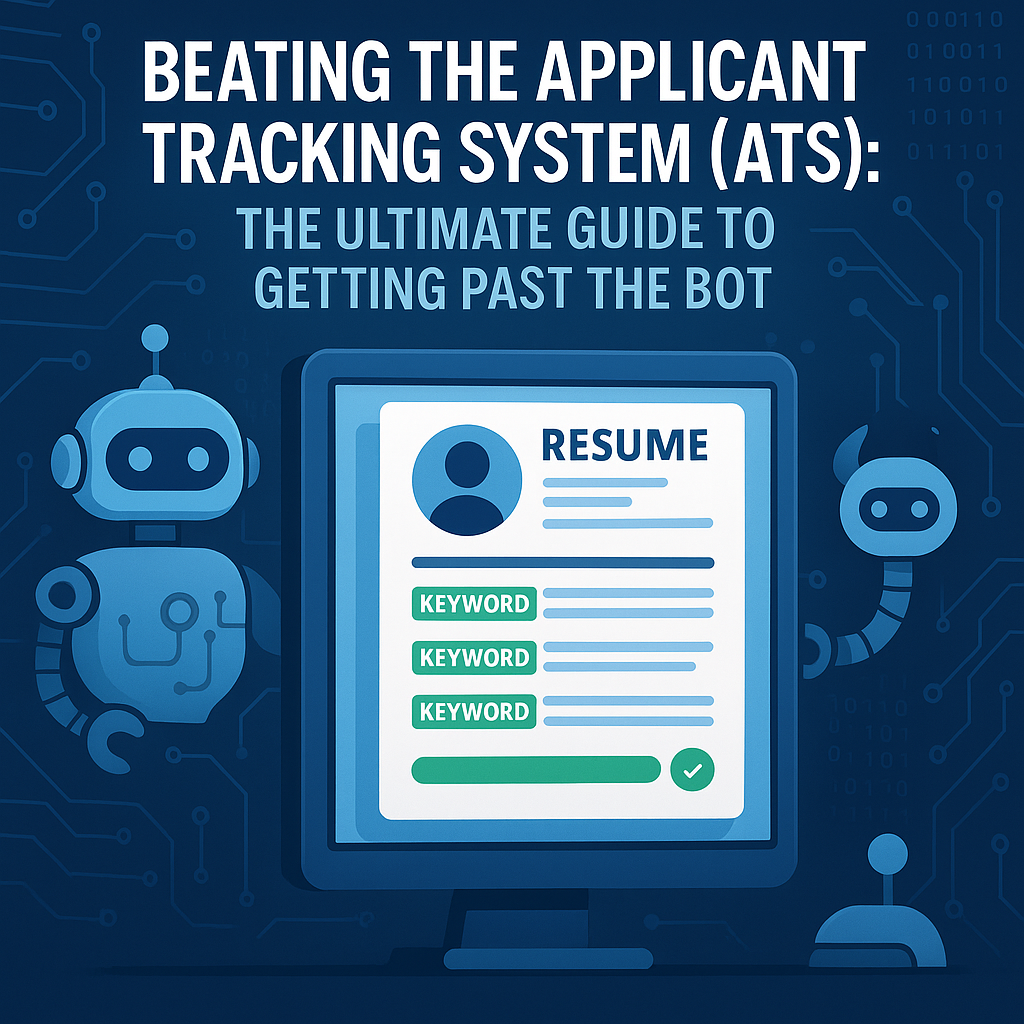
Beating the Applicant Tracking System (ATS): The Ultimate Guide to Getting Past the Bot
Is your resume getting rejected instantly? It might be the ATS. Learn how Applicant Tracking Systems work, how to format your resume to beat the bot, and the keyword strategies that get you noticed.
2025-12-10
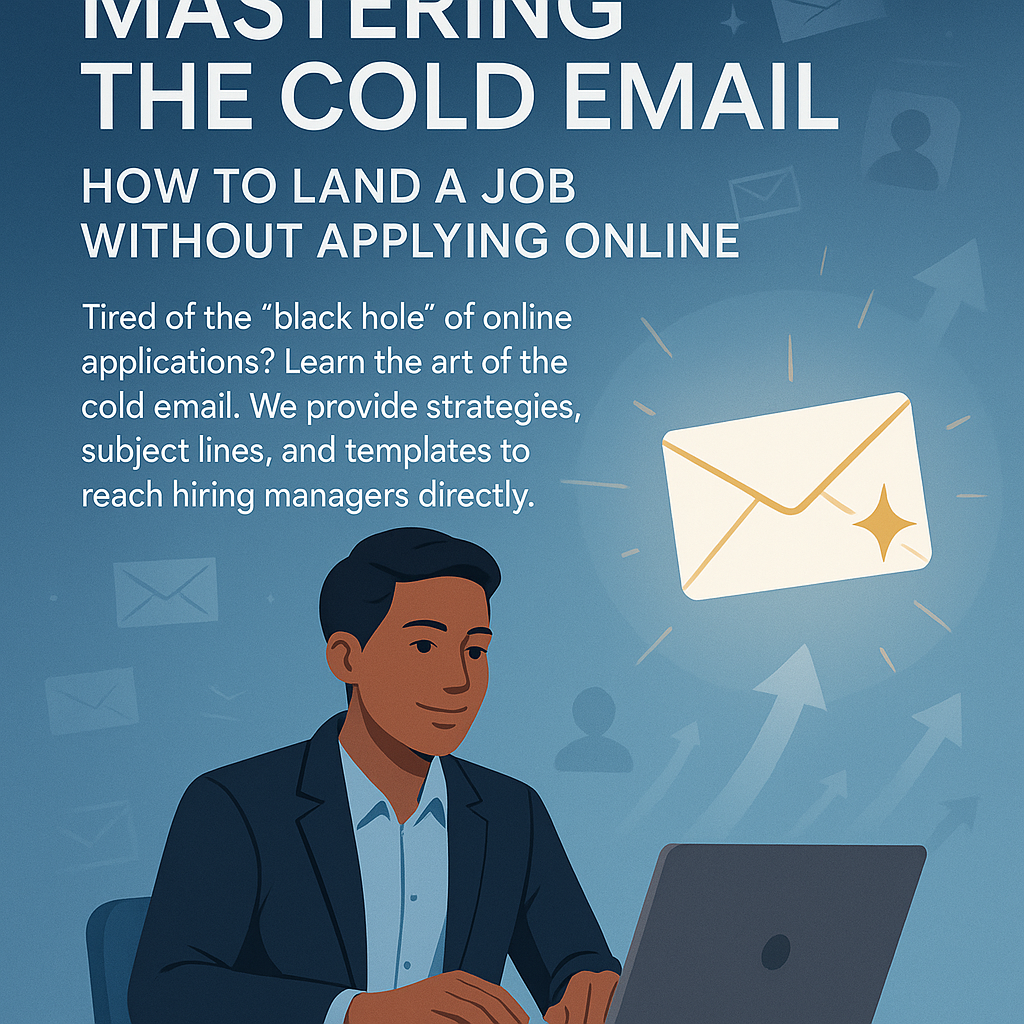
Mastering the Cold Email: How to Land a Job Without Applying Online
Tired of the "black hole" of online applications? Learn the art of the cold email. We provide strategies, subject lines, and templates to reach hiring managers directly.
2025-12-10
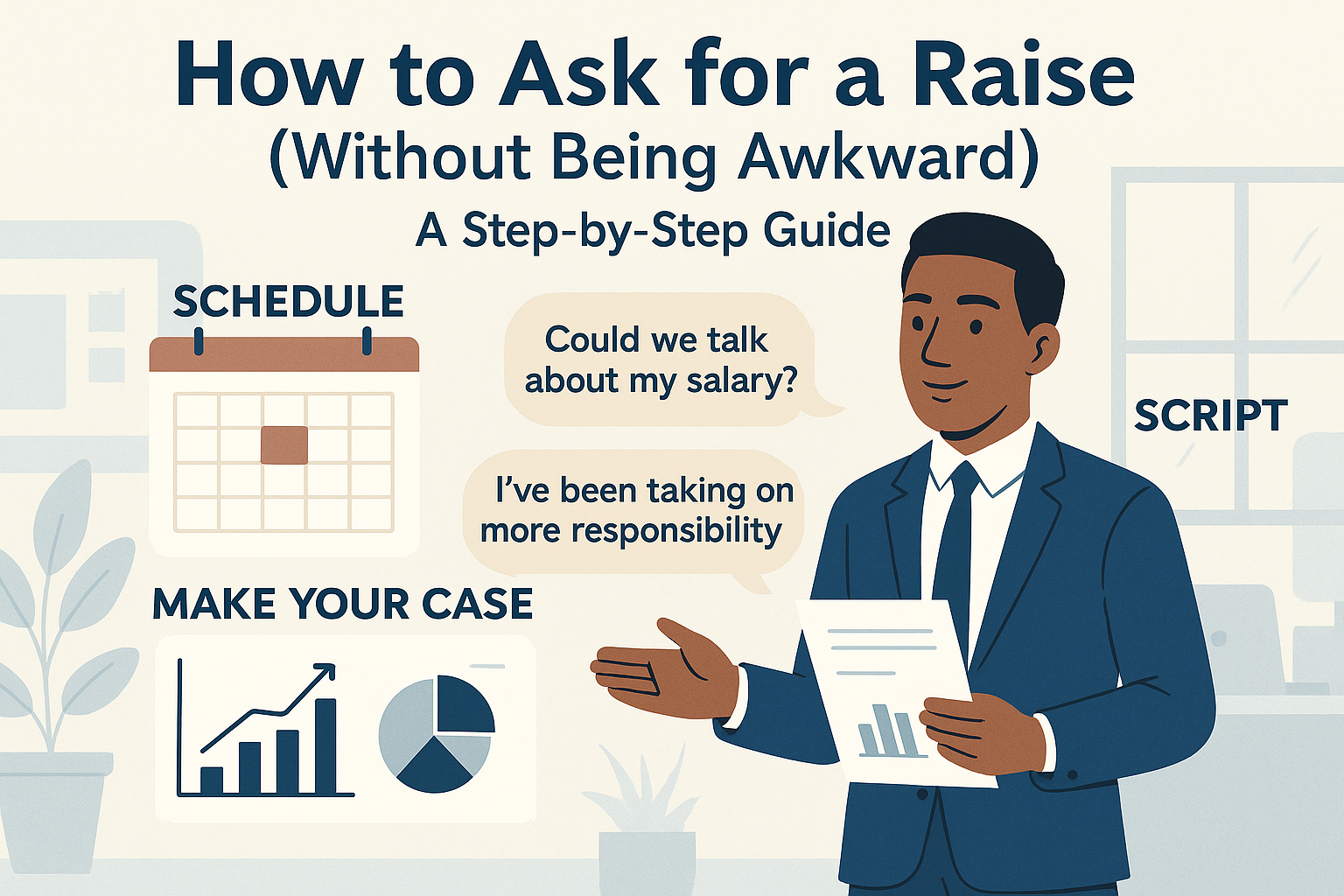
How to Ask for a Raise (Without Being Awkward): A Step-by-Step Guide
Don't wait for your annual appraisal. Learn the strategic way to ask for a raise, build your business case, and use our scripts to get the salary hike you deserve.
2025-12-10
The First 90 Days: A Strategic Plan to Impress Your New Boss
Your first 3 months in a new job determine your reputation. Use our 30-60-90 day plan to secure early wins, build relationships, and pass probation with flying colors.
2025-12-09
Background Verification (BGV) Explained: What Employers Actually Check (And What Gets You Rejected)
Worried about the background check? We decode the Background Verification (BGV) process in India, covering employment history, education checks, and how to handle discrepancies.
2025-12-09