


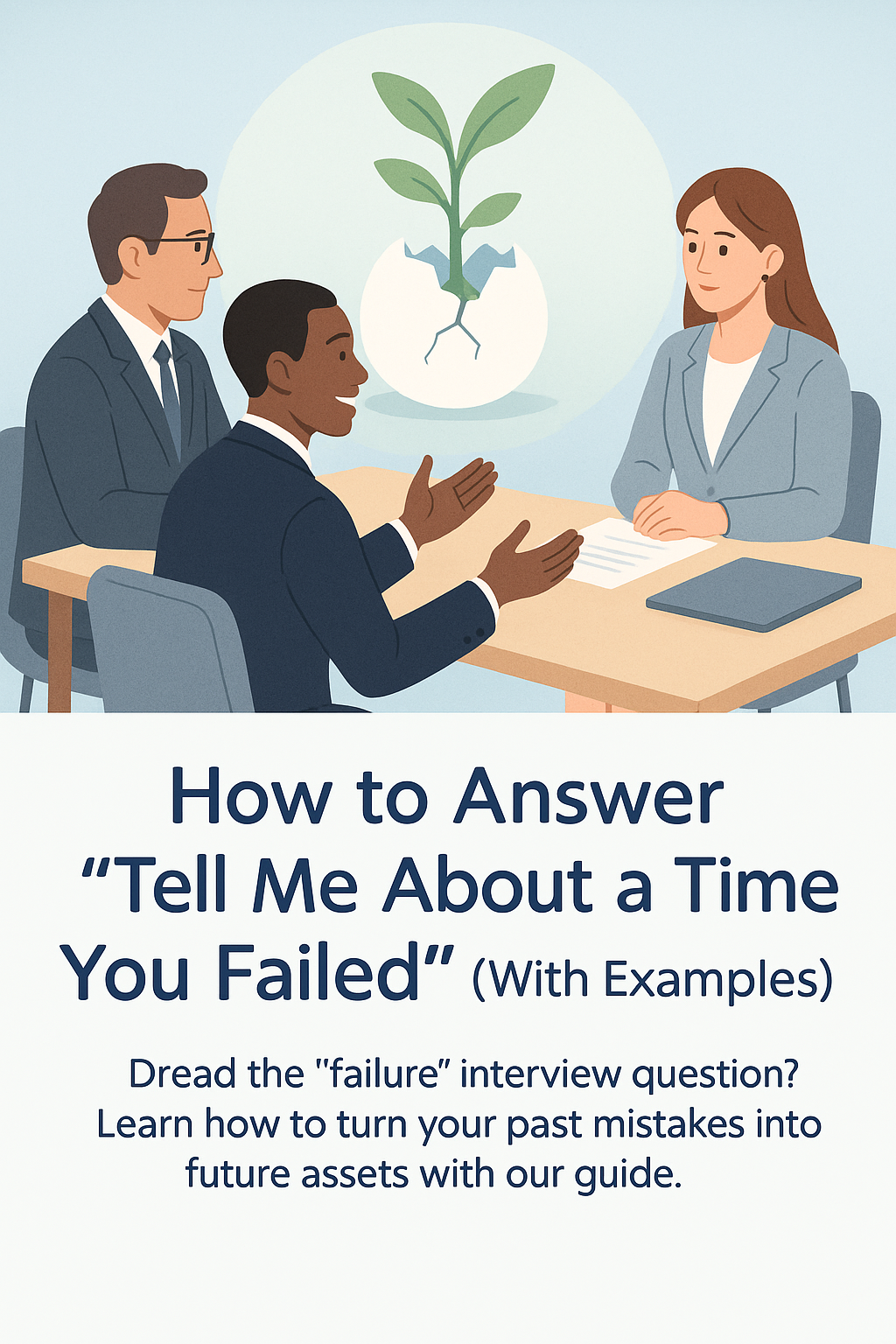
How to Answer "Tell Me About a Time You Failed" (With Examples)
In the landscape of job interviews, few questions trigger as much immediate anxiety as: "Tell me about a time you failed."
It feels completely counterintuitive. You have spent hours polishing your resume to highlight your successes. You have rehearsed your "greatest strengths." You are sitting in that chair to prove you are the perfect, competent choice for the job. And now, the interviewer is asking you to do the exact opposite: to spotlight a mistake, a flaw, a moment where things went wrong.
The instinct for many candidates is to dodge the question. They might give a "fake failure" (e.g., "I worked too hard and burned out") or claim they can't recall a significant failure. Both of these are fatal errors. The "fake failure" shows a lack of authenticity, and claiming perfection shows a terrifying lack of self-awareness. Everyone fails. If you haven't failed, you haven't tried anything difficult.
The interviewer isn't asking this to shame you or to find a reason to reject you. They are digging for something much deeper. They want to know: Do you have the maturity to own your mistakes? Do you have the resilience to recover from them? And most importantly, do you have the capacity to learn and grow?
A failure, when framed correctly, can be your most powerful story. It transforms you from a two-dimensional "perfect" candidate into a three-dimensional, resilient human being who gets better with experience. This guide will show you how to choose the right failure, how to structure your story using the STAR method, and how to turn your biggest professional stumble into a reason to hire you.
Choosing the "Right" Failure
Not all failures are created equal in an interview setting. You need to select a story that is significant enough to be real, but not so catastrophic that it raises red flags about your core competency.
What to Avoid: * Failures caused by character flaws: (e.g., "I lied to a client," "I got into a shouting match with my boss"). These are deal-breakers. * Failures in core, non-negotiable skills: If you are applying for a driver's job, don't talk about the time you crashed the company car. If you are an accountant, don't talk about the time you forgot to file taxes. * "Non-failure" failures: "I failed to reach my sales goal by 1% but still was the top performer." This sounds arrogant and disingenuous.
What to Choose: * A failure of process or judgment: (e.g., "I underestimated the timeline," "I didn't communicate a risk early enough," "I tried to do it all myself instead of delegating"). * A mistake that happened a while ago: It shows you have grown since then. * A story with a clear turning point and lesson: The failure is just the setup; the recovery and learning are the main event.
The Strategy: The STAR Method with a Twist
To answer this effectively, use the STAR method (Situation, Task, Action, Result), but add a critical "L" at the end: Learning.
- Situation: Set the scene briefly.
- Task: What were you trying to achieve?
- Action (The Mistake): What did you do (or not do) that led to the failure? Be honest and own it. Use "I," not "we."
- Result (The Impact): What was the negative outcome? Don't sugarcoat it, but don't dwell on it.
- Learning (The Pivot): This is the most important part. What did you learn? How did you change your behavior? Give an example of how you applied this lesson later to ensure success.
Sample Answers to Help You Prepare
Here are two examples of how to structure a winning answer.
Example 1: The "Communication Breakdown" (Good for Project Managers/Team Leads)
Situation: "In my previous role as a Project Coordinator, I was managing a tight deadline for a client deliverable." Task: "My goal was to ensure the design and development teams were aligned to launch the new website feature by Friday." Action (The Mistake): "I assumed that because I had sent an email with the requirements, everyone was on the same page. I didn't schedule a kickoff meeting to walk through the details, thinking I was saving everyone time." Result: "The design team interpreted the requirements differently than the developers. We realized the mismatch on Thursday, just one day before launch. We missed the deadline by three days, and the client was frustrated." Learning: "I learned that efficient communication isn't just about sending information; it's about ensuring understanding. I realized that skipping the 'synchronization' step to save time actually costs more time in the end. Since then, I implemented a mandatory 15-minute 'stand-up' for all cross-functional projects. In my very next project, this process helped us catch a similar misunderstanding on day one, and we delivered that project two days early."
Example 2: The "Over-Commitment" (Good for Individual Contributors)
Situation: "Early in my career as a Content Writer, I wanted to impress my manager during a busy quarter." Task: "I volunteered to take on three extra articles a week, in addition to my regular workload." Action (The Mistake): "I overestimated my capacity and underestimated the research time required. I didn't want to ask for help or admit I was struggling." Result: "The quality of my work suffered across the board. I missed a deadline for the first time, and my editor had to rewrite significant portions of my drafts." Learning: "I learned the importance of realistic capacity planning and the value of communicating early if I'm at risk. I realized that saying 'yes' to everything isn't helpful if the output isn't high quality. I now use a project management tool to track my hours and capacity visually. When asked to take on extra work now, I review my bandwidth first and negotiate a realistic timeline. This has allowed me to maintain a 100% on-time delivery rate for the last two years."
Key Takeaways for Your Answer
- Own It: Don't blame others ("My team didn't listen"). Use "I" statements ("I failed to communicate").
- Keep the "Failure" Part Brief: Spend 20% of the time on the mistake and 80% on the recovery and the lesson.
- Prove the Change: Don't just say "I learned." Give a concrete example of how you act differently now because of that experience.
Conclusion: Failure is Tuition
In the professional world, failure is often just the tuition you pay for success. By answering this question with honesty and strategic reflection, you show the interviewer that you are a professional who doesn't just go through the motions, but who actively evolves and improves. You transform a story about a stumble into a story about strength.
To ensure you're ready for every curveball an interviewer might throw, continue your preparation with our comprehensive database of interview questions. And to find the right role where you can apply your hard-earned wisdom, keep your job alerts active.
For more tools to help you build a resilient and successful career, https://jobpe.com.

Creative Content Writer
More from Debojyoti Roy
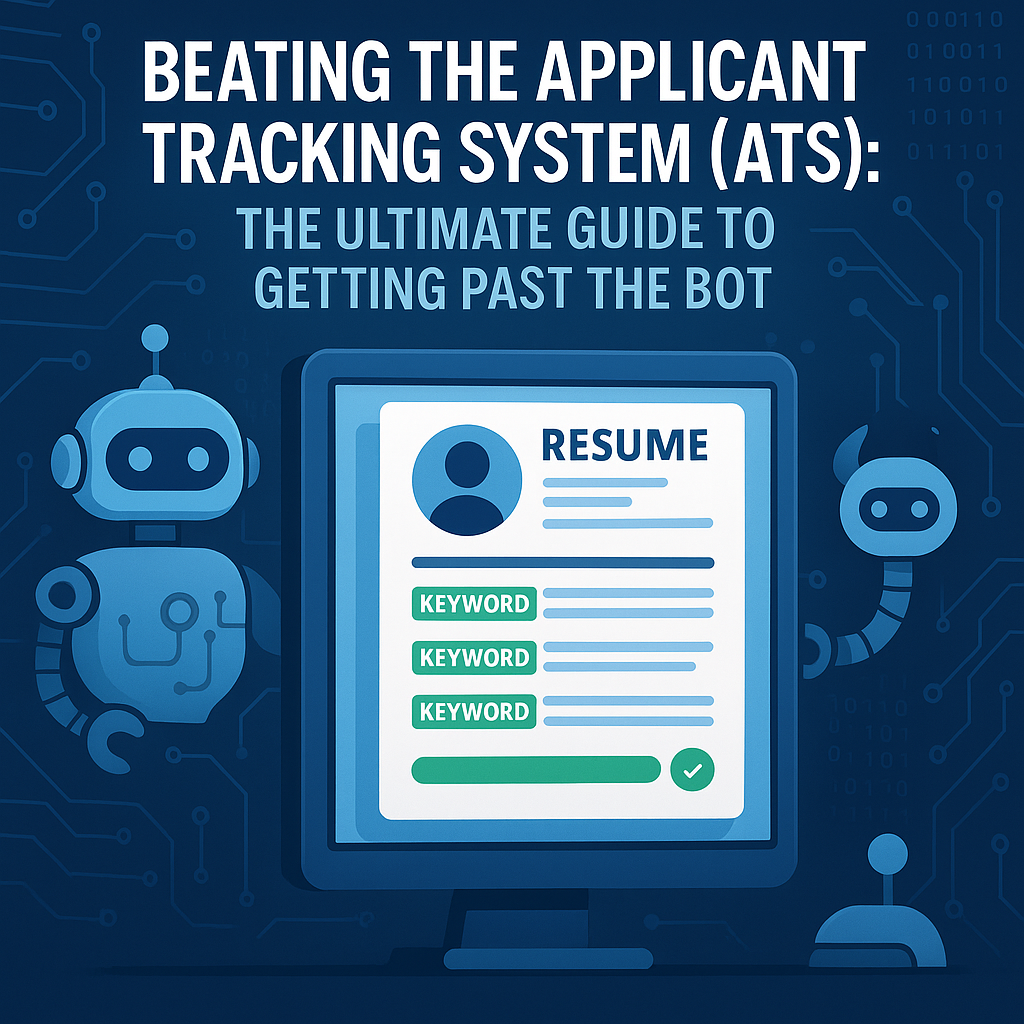
Beating the Applicant Tracking System (ATS): The Ultimate Guide to Getting Past the Bot
Is your resume getting rejected instantly? It might be the ATS. Learn how Applicant Tracking Systems work, how to format your resume to beat the bot, and the keyword strategies that get you noticed.
2025-12-10
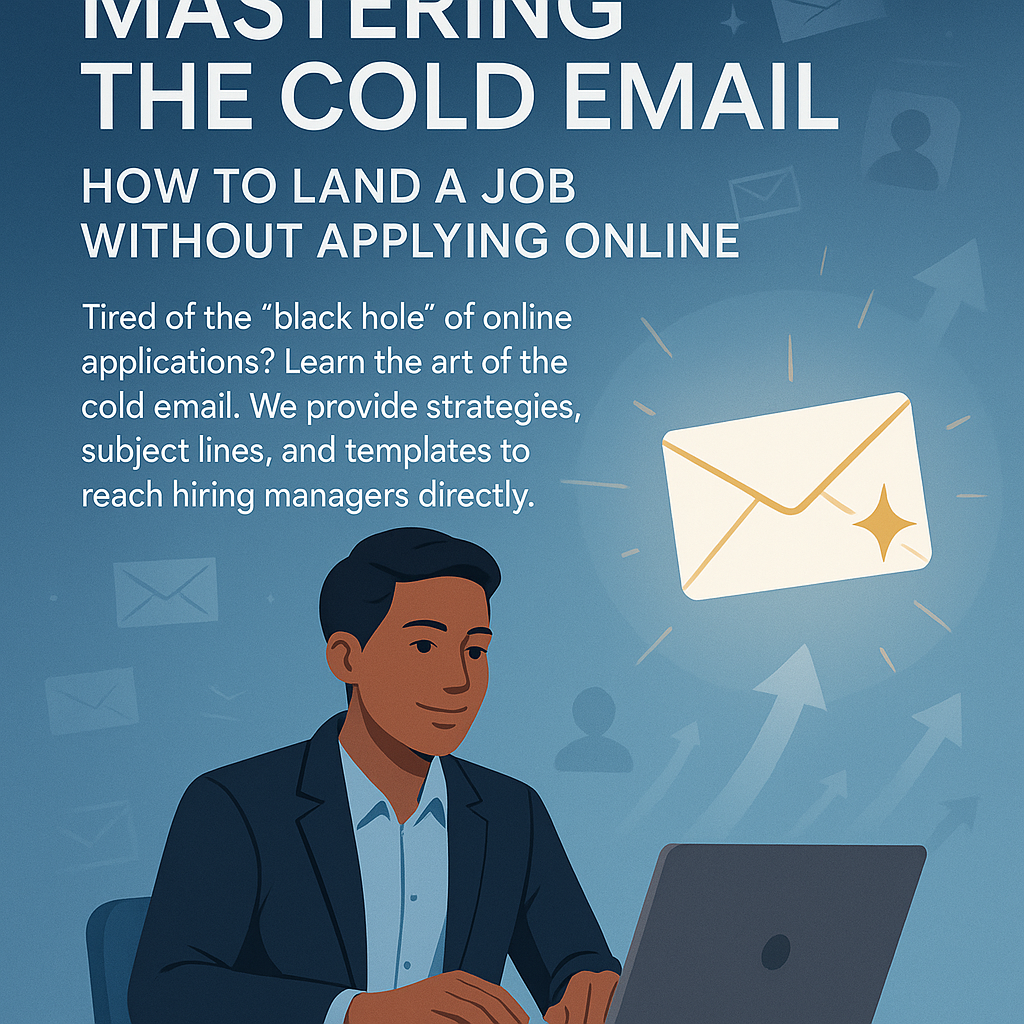
Mastering the Cold Email: How to Land a Job Without Applying Online
Tired of the "black hole" of online applications? Learn the art of the cold email. We provide strategies, subject lines, and templates to reach hiring managers directly.
2025-12-10
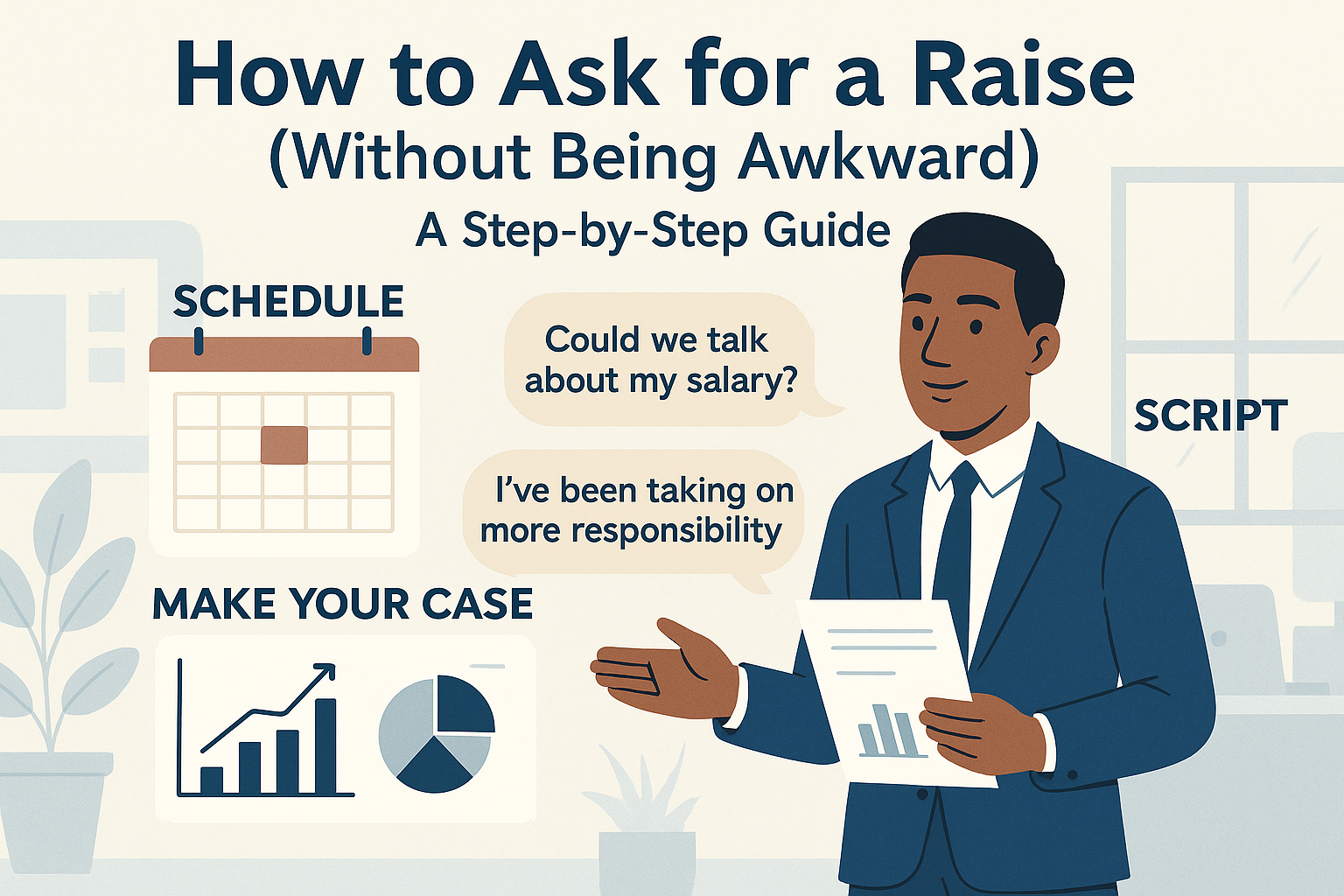
How to Ask for a Raise (Without Being Awkward): A Step-by-Step Guide
Don't wait for your annual appraisal. Learn the strategic way to ask for a raise, build your business case, and use our scripts to get the salary hike you deserve.
2025-12-10
The First 90 Days: A Strategic Plan to Impress Your New Boss
Your first 3 months in a new job determine your reputation. Use our 30-60-90 day plan to secure early wins, build relationships, and pass probation with flying colors.
2025-12-09
Background Verification (BGV) Explained: What Employers Actually Check (And What Gets You Rejected)
Worried about the background check? We decode the Background Verification (BGV) process in India, covering employment history, education checks, and how to handle discrepancies.
2025-12-09