


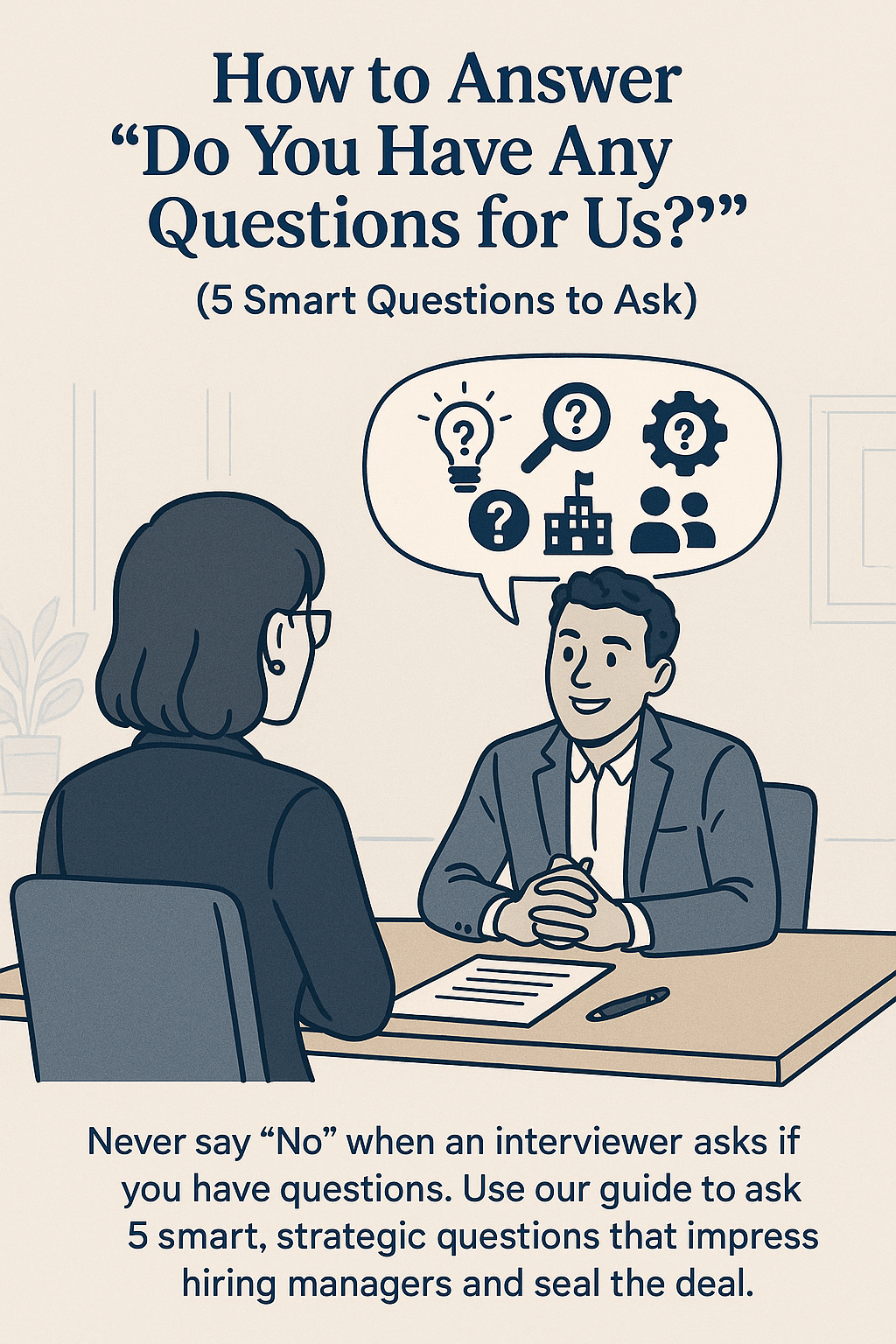
How to Answer "Do You Have Any Questions for Us?" (5 Smart Questions to Ask)
The interview is winding down. You’ve successfully navigated the behavioral questions, showcased your technical skills, and built a good rapport. Then, the interviewer closes their notebook, smiles, and asks the final question: "So, do you have any questions for us?"
For many exhausted candidates, the instinct is to say, "No, I think you covered everything," and make a quick exit.
This is a fatal mistake.
In the eyes of a hiring manager, saying "I have no questions" signals one of three things: 1. You are not interested: You don't care enough to dig deeper. 2. You are not prepared: You didn't do enough research to have inquiries. 3. You are not critical: You accept things at face value and lack intellectual curiosity.
This part of the interview—often called the "reverse interview"—is not just a formality. It is a strategic opportunity. It allows you to demonstrate your intelligence, your understanding of the industry, and your enthusiasm for the role. It also gives you critical information to decide if you actually want the job.
This guide will turn this awkward closing moment into your competitive advantage. We will outline what you should never ask, and provide you with 5 smart, strategic questions that will leave a lasting positive impression.
The Rule of Engagement: What NOT to Ask
Before we get to the good questions, let's eliminate the bad ones. * "What does your company do?" (You should already know this. It shows zero preparation.) * "How much vacation do I get?" / "What is the salary?" (Save these for the offer stage or HR screening. Asking them too early makes you look transactional.) * "Did I get the job?" (It puts them on the spot and looks desperate.)
5 Smart Questions That Impress Hiring Managers
These questions are designed to show that you are thinking like a future employee who wants to contribute, not just a candidate who wants a job.
1. The "Success Metrics" Question
"If I were to join the team, what would you want me to have accomplished in my first 90 days for you to consider this hire a massive success?"
Why it works: It shows you are results-oriented. You aren't just asking "what will I do?" (tasks); you are asking "what is the value?" (outcomes). It also forces the interviewer to visualize you succeeding in the role, which is a powerful psychological trick.
2. The "Real Challenge" Question
"What is the single biggest challenge the team is currently facing, and how would the person in this role help solve it?"
Why it works: It shows you aren't afraid of hard work. It demonstrates that you want to be a problem solver, not just a seat warmer. It also gives you honest insight into the pain points of the job (e.g., "We are understaffed," or "Our software is outdated").
3. The "Culture in Action" Question
"I’ve read about your company value of [Value X, e.g., Innovation]. Can you tell me about a specific time you saw that value in action recently?"
Why it works: Anyone can put "Innovation" on a website. Asking for a specific example forces them to prove the culture is real. If they struggle to answer, it’s a red flag. It also proves you did your homework on their values.
4. The "Evolution" Question
"How has this role evolved over the last few years, and where do you see it going in the future?"
Why it works: It shows you are thinking about the long-term trajectory. It helps you understand if this is a static, dead-end role, or a dynamic position that grows with the company. It also clarifies if this is a new position (which might lack structure) or a backfill (which might have big shoes to fill).
5. The "Personal Connection" Question
"What is your favorite part about working here, and what is one thing you would change if you could?"
Why it works: People love talking about themselves. This builds a personal connection and breaks the formal "interviewer/candidate" barrier. The answer to the "one thing you would change" part can also reveal hidden red flags about the company culture.
How to Handle the "Next Steps"
Once you have asked 2-3 of these questions (don't ask all 5 if time is short), you need to close the interview professionally.
The Closing Script:
"Those were all the questions I had. Thank you for sharing those insights; it really solidified my interest in the role. I know you're busy, so I won't keep you longer. Could you let me know what the next steps in the process look like and when I might expect to hear back?"
Conclusion: Interviewing is a Two-Way Street
Remember, an interview is not an interrogation; it is a conversation. By asking thoughtful, strategic questions, you shift the dynamic. You become an active participant in the process, assessing the company just as rigorously as they are assessing you.
When you walk out of the room, you want the interviewer to think, "Wow, they asked great questions. They really 'get' what we are trying to do here."
Now that you've mastered the interview close, don't forget the final step: sending the perfect Thank You Email. And to keep your options open, continue to monitor new opportunities via JobPe.
For more tools to help you navigate every interaction in your job search, https://jobpe.com.

Creative Content Writer
More from Debojyoti Roy
Beating the Applicant Tracking System (ATS): The Ultimate Guide to Getting Past the Bot
Is your resume getting rejected instantly? It might be the ATS. Learn how Applicant Tracking Systems work, how to format your resume to beat the bot, and the keyword strategies that get you noticed.
2025-12-10
Mastering the Cold Email: How to Land a Job Without Applying Online
Tired of the "black hole" of online applications? Learn the art of the cold email. We provide strategies, subject lines, and templates to reach hiring managers directly.
2025-12-10
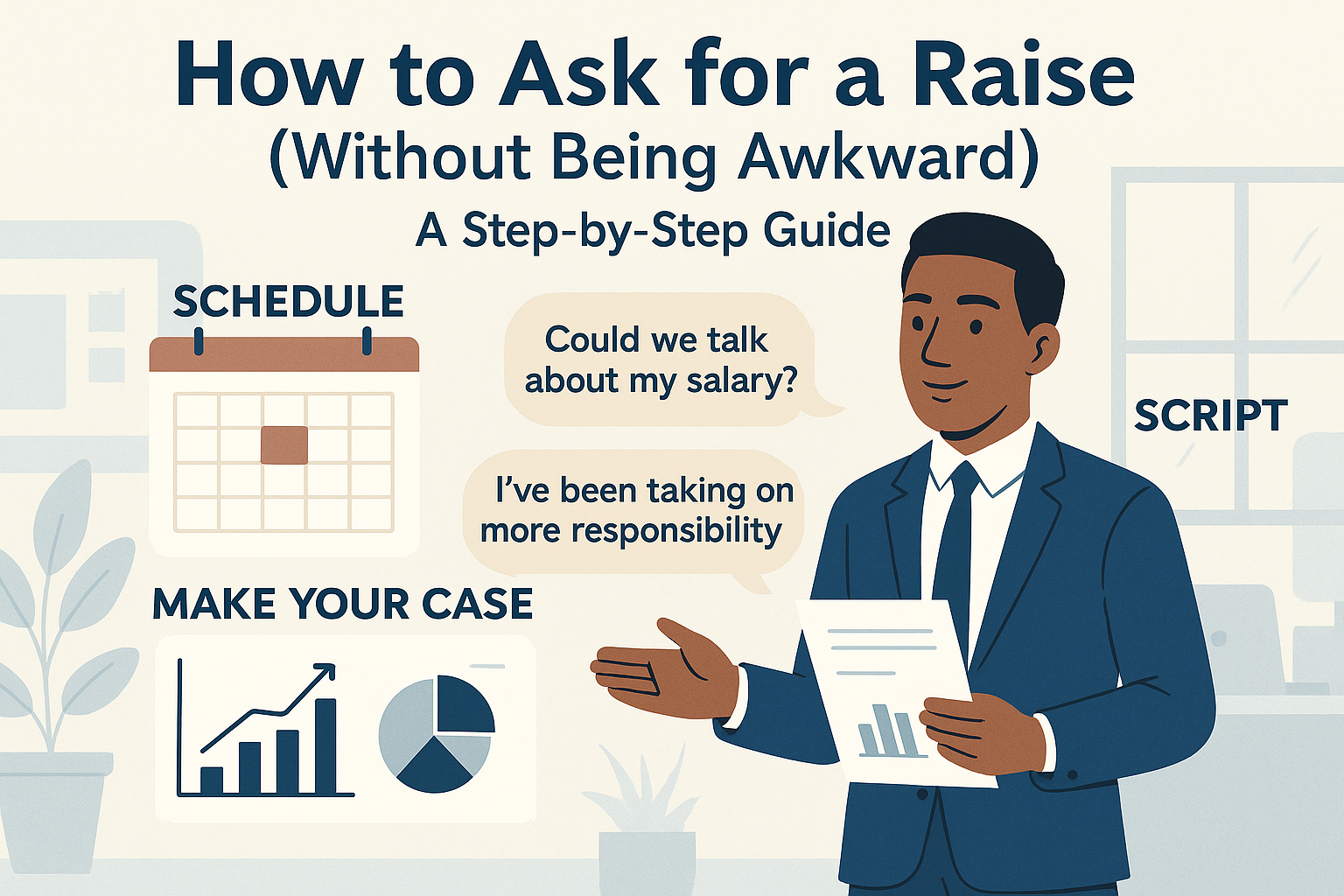
How to Ask for a Raise (Without Being Awkward): A Step-by-Step Guide
Don't wait for your annual appraisal. Learn the strategic way to ask for a raise, build your business case, and use our scripts to get the salary hike you deserve.
2025-12-10
The First 90 Days: A Strategic Plan to Impress Your New Boss
Your first 3 months in a new job determine your reputation. Use our 30-60-90 day plan to secure early wins, build relationships, and pass probation with flying colors.
2025-12-09
Background Verification (BGV) Explained: What Employers Actually Check (And What Gets You Rejected)
Worried about the background check? We decode the Background Verification (BGV) process in India, covering employment history, education checks, and how to handle discrepancies.
2025-12-09