


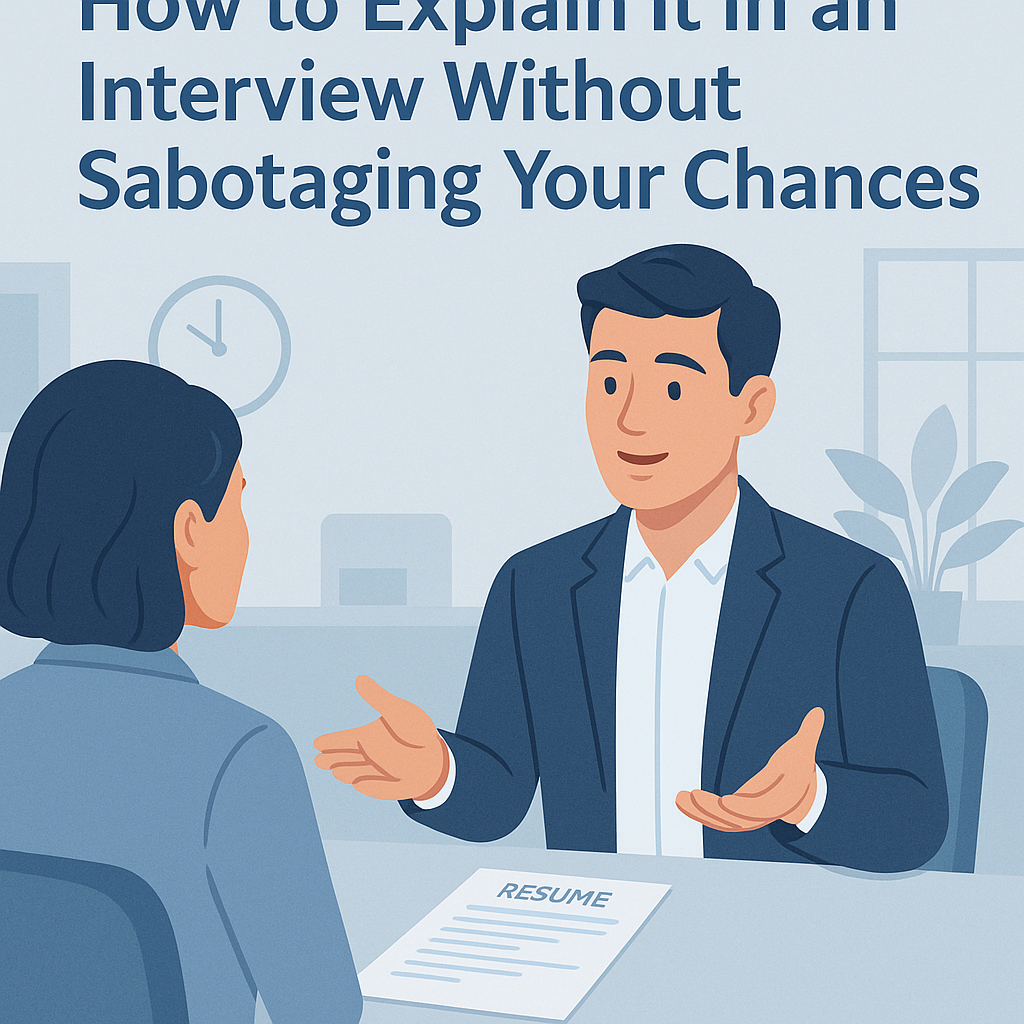
Fired or Laid Off? How to Explain It in an Interview Without Sabotaging Your Chances
Of all the questions a candidate dreads, "Why did you leave your last job?" becomes infinitely more terrifying when the answer is involuntary. Whether it was a mass layoff due to budget cuts or a firing due to performance or fit, losing a job is a traumatic experience that can shatter your confidence. When you’re sitting in an interview, the fear is palpable: If I tell them the truth, will they think I'm damaged goods? Will they assume I'm incompetent or difficult?
This fear often leads candidates to make fatal mistakes. They might try to lie (which is easily discovered during a background check), over-explain with a defensive, ten-minute story, or badmouth their former employer.
Here is the reality check: Getting fired or laid off is not a career death sentence. In the modern, volatile economy, it is increasingly common. Recruiters meet successful, talented people every day who have hit this speedbump. The "red flag" is rarely the termination itself; it is how you talk about it.
An interview is not a confession booth; it is a sales meeting. Your goal is not to hide your past, but to frame it in a way that emphasizes your resilience, your learning, and your readiness for the future. This guide will help you distinguish between a layoff and a firing, provide you with the exact scripts to handle both scenarios with dignity, and show you how to turn a career low point into a testament to your character.
Scenario A: The Layoff (It’s Not You, It’s the Business)
A layoff (reduction in force) is fundamentally different from being fired. It is unrelated to your individual performance. It happens because of restructuring, mergers, budget cuts, or strategic pivots.
The Strategy: Be direct, brief, and factual. There is no shame here. You are part of a cohort of professionals who were affected by a business decision.
What to Avoid: Do not sound bitter about the company’s decision ("They didn't know what they were doing"). Do not act like a victim.
The Script:
"Unfortunately, my role was impacted by a company-wide restructuring [or workforce reduction] due to [brief reason: economic headwinds/loss of a major client/strategic pivot]. My position, along with [Number/Percentage] of the department, was eliminated. While it was difficult to leave a team I enjoyed working with, I’m proud of the work we accomplished, particularly [mention one key win], and I am now excited to apply those skills to a new challenge."
Why this works: It immediately depersonalizes the event. It frames it as a macro business decision, not a micro performance issue, and pivots quickly to your achievements and future.
Scenario B: Fired for Performance (The Hard Conversation)
This is trickier. Being fired "for cause" (performance or fit) requires a delicate balance of honesty and reputation management.
The Strategy: The "Learning Pivot." You must take ownership without being overly self-critical. Frame the firing as a mismatch of expectations or skill sets that taught you a valuable lesson about where you thrive.
What to Avoid: Never lie. If you say you resigned and the reference check reveals you were fired, the offer will be rescinded. Also, do not blame the boss ("My manager hated me").
The Script (The "Skill Set Mismatch"):
"To be honest, the role ultimately wasn't the right fit for my strengths. The position evolved to focus heavily on [Skill A - e.g., cold calling sales], while my core expertise and passion lie in [Skill B - e.g., account management and relationship building]. While I gave it my best effort, we mutually agreed that I would be more successful in a role that leveraged my strengths in [Skill B]. I learned a lot about the importance of role alignment from that experience, which is why I’m so excited about this position, as it seems perfectly aligned with what I do best."
The Script (The "Performance Issue"):
"I was let go because I didn't meet specific quotas during my probation period. Looking back, I realized I hadn't communicated early enough that I needed more training on the new software suite. It was a tough lesson, but a valuable one. Since then, I’ve taken proactive steps to master [Software Name] through an advanced certification course, and I’ve learned the importance of asking for help and clarification immediately. I’m now fully confident in my ability to execute on these tasks."
Why this works: It shows maturity. You aren't hiding from the failure; you are analyzing it, showing what you learned, and proving you have fixed the gap.
Scenario C: Fired for "Fit" or Personality Clashes
Sometimes, you just don't click with a manager or a culture.
The Strategy: Focus on the environment. Describe the environment you didn't thrive in (neutrally) and contrast it with the environment you do thrive in (which hopefully matches the company you are interviewing with).
The Script:
"I was let go because it became clear that my working style wasn't a match for the company's specific culture at that time. They operated in a highly rigid, siloed structure, and I thrive in collaborative, cross-functional environments where teams solve problems together. I learned that culture fit is just as important as skill fit, which is why I’m so drawn to your company's value of 'One Team Collaboration'."
General Rules for "The Talk"
- Keep it Brief: Do not tell a 5-minute story. 30-45 seconds is enough. The more you explain, the more defensive you sound.
- Sandwich the Negative: Start with a positive (what you learned/did well), put the reason for leaving in the middle, and end with a positive (why you are ready for this job).
- Practice Out Loud: You need to say these words until they don't make your voice shake. Practice with a friend until you sound calm and factual.
- Don't Let it Define You: This is one data point in your career, not the whole summary. Ensure the rest of your interview focuses heavily on your skills, your achievements, and your future value.
Conclusion: Resilience is a Hireable Skill
Employers hire human beings, not robots. Human beings experience setbacks. A candidate who has been knocked down and come back stronger, wiser, and more self-aware is often more valuable than one who has never been tested.
By owning your story and controlling the narrative, you take the power away from the "fired" label. You show the interviewer that you are honest, resilient, and ready to work.
Now that you're prepared to handle the tough questions, make sure the rest of your presentation is flawless. Polish your resume with the JobPe Resume Builder to highlight your wins, not your gaps. And to find a company where you can truly thrive, keep your job alerts targeted and active.
For more resources to help you bounce back and build a resilient career, https://jobpe.com.